
Discovering Croatia by Car: A Summer Road Trip Adventure
Why a Car Is the Only Way to Really See Croatia
Croatia’s coastline stretches for over 1,700 kilometres, but the straight-line distance from Istria to Dubrovnik is less than 700. The difference is the islands, the peninsulas, the mountains that plunge into the sea, and the roads that trace every contour. This is a country built for a Croatia road trip, not a series of flights and ferries stitched together with bus timetables and frayed patience.
With a rental car from Cro Car Hire — picked up in Zagreb, Pula, Split, or Dubrovnik — you can build an itinerary that follows your rhythm, not someone else’s schedule. This is the summer route we’d take: a loop (or a one-way, depending on where you start) that hits Istria’s hill towns, the lunar landscape of Pag, the glamorous islands of Brač and Hvar, the wine roads of Pelješac, and the walled wonder of Dubrovnik. Two weeks minimum. Three if you want to soak in it.
Istria: Truffles, Hill Towns, and a Coastline That Thinks It’s Italian
Istria is the wedge-shaped peninsula in the northwest, and it doesn’t feel entirely like the rest of Croatia. The architecture is Venetian, the food leans Italian, and the bilingual road signs (Croatian/Italian) remind you that this was part of Italy until 1947. It’s also one of the best food regions in Europe, and a Croatia road trip that skips Istria is incomplete.
Rovinj: The Postcard Town
Rovinj sits on a rounded peninsula on the west coast of Istria, its pastel houses stacked so tightly they look like they’re holding each other up. The Campanile of St. Euphemia — a 60-metre bell tower modelled on Venice’s St. Mark’s — dominates the skyline. Climb it (€4) for a view that takes in the entire archipelago of islets scattered offshore.
Grisia, the cobbled main street, is lined with galleries and small ateliers. It’s touristy, but in a charming way — less cruise-ship magnets, more painters selling watercolours of the same street they’re standing on. For breakfast, Augusto Coffee on Trg Valdibora does a flat white and a pastry for about €6, with tables that catch the morning sun.
Swimming in Rovinj itself is limited — the old town has a few rocky entries but no real beach. Drive 15 minutes south to Zlatni Rt (Golden Cape), a forested park with pebble coves and shaded paths. It’s free, it’s beautiful, and it’s where locals go to escape the old-town crowds. Park in the lot at the entrance (€3 for the day).
Motovun: The Truffle Capital
Forty-five minutes inland from Rovinj, Motovun sits on top of a conical hill like a medieval crown. The road up is steep and narrow — the car park at the base is your friend. A shuttle bus (€2 return) runs up the hill in summer, or you can walk the switchback road in about 20 minutes. The view from the top, over the Mirna River valley and the Motovun Forest, is one of the best in Istria.
Motovun Forest is where the white truffles come from. Specifically, it’s where Giancarlo Zigante found a 1.31-kilogram white truffle in 1999 — still a Guinness World Record. The Zigante truffle empire now includes a restaurant, a shop, and a tasting room at the base of the hill in Livade. A truffle tasting plate — scrambled eggs with white truffle shavings, truffle cheese, truffle salami — runs about €25. It’s touristy, yes. It’s also delicious.
In the town itself, Konoba Mondo does Istrian home cooking without the truffle hype surcharge: fuži (hand-rolled pasta) with game ragù, boškarin (Istrian ox) steak, house red wine. A three-course meal for two is about €55.
Pag Island: The Moon, Cheese, and Zrće
From Istria, it’s a three-hour drive to Pag Island — south through the Učka Tunnel, past Rijeka, then across the bridge at Posedarje that connects the island to the mainland. (Pag has been connected by bridge since 1968; no ferry needed.)
Pag looks like nowhere else in Croatia. The northern half of the island is almost completely bare — a stark, white, rocky landscape carved by the bura wind so relentlessly that nothing taller than sage can grow. It’s beautiful in a severe, otherworldly way. The southern half is greener and home to most of the population.
Pag is famous for two things. The first is Paški sir (Pag cheese), a hard sheep’s milk cheese flavoured by the aromatic herbs — particularly sage — that the sheep graze on. It’s Croatia’s most celebrated cheese, with EU protected designation of origin status. Visit the Gligora dairy in Kolan for a tasting and tour (about €10). Their award-winning Paški Sir is nutty, crystalline, and intense. Buy a wedge to take with you — it travels well.
The second thing Pag is famous for is Zrće Beach, near Novalja. It’s Croatia’s answer to Ibiza — a strip of open-air clubs (Aquarius, Papaya, Kalypso) that run from June to September with international DJ lineups. If that’s your scene, you’ll know about it already. If it isn’t, stay in Pag Town in the south, which is quieter, older, and has a 15th-century salt warehouse that’s now a lace gallery (Pag lace is a UNESCO intangible heritage craft, made by Benedictine nuns).
For lunch, Na Tale in Pag Town serves grilled lamb on an open fire — Pag lamb is a protected speciality, raised on those same herb-scented pastures. A half-kilo with potatoes and salad is about €22. The terrace overlooks the bay, and the service is slow in the best way.
Brač and Hvar: The Glamour Islands
From Pag, drive south to Split (about two hours on the A1 from Posedarje) and board a car ferry. Jadrolinija runs regular services: Split to Supetar on Brač takes 50 minutes (about €25 for a car and driver, plus €5 per passenger); Split to Stari Grad on Hvar takes two hours (about €40 for a car). Book ahead in summer — the ferries fill up, and showing up without a reservation in August is a gamble.
Brač: The Golden Horn
Brač is the island of stone — the White House is built from Brač limestone, quarried here since Roman times — and of Zlatni Rat, the Golden Horn beach near Bol. This is Croatia’s most photographed beach: a narrow spit of fine pebbles that shifts shape with the currents, extending into a perfect horn that points into the turquoise channel between Brač and Hvar. The water is cold (mountain runoff from the Cetina river feeds into the channel), but on a 35°C day that’s a feature, not a bug.
Park in the lot above the beach (€10 for the day in summer) and walk down. The beach itself gets rammed by 11 AM, so go early or late. For lunch, walk 15 minutes along the coast to the village of Murvica and find Konoba Zlatni Val, which serves octopus peka — slow-cooked under the bell, with potatoes, olive oil, and herbs. It needs to be ordered at least three hours ahead. This is non-negotiable; call before you arrive. The reward is some of the best food on the Adriatic.
On the north side of the island, Supetar is the ferry port and has a more lived-in feel than Bol. Punta Beach is a five-minute walk from the ferry terminal, with a waterfront bar that does decent cocktails. For dinner, Otok on the harbour does wood-fired pizza and fresh fish; a meal for two with wine runs about €50.
Hvar: Lavender and Late Nights
Hvar Town is Croatia’s most glamorous stop — a marble-paved square, a hilltop fortress, a harbour full of superyachts in August, and a nightlife scene that attracts the same crowd that summers in Mykonos. It can be a lot. But Hvar is also an island of lavender fields, abandoned stone villages in the interior, and quiet coves that the yacht crowd never reaches.
Park at the public lot above the bus station (€2/hour) and walk into town. The Španjola Fortress above the town (€8) is a steep 20-minute climb, but the view of the Pakleni Islands archipelago is worth it. Afterwards, wander the back streets behind the cathedral — you’ll find the Benedictine convent where nuns have been making lace from agave fibres for centuries. You can buy a small piece for about €20; it’s a UNESCO-protected craft and the money goes to the convent.
For a break from the town’s intensity, drive 20 minutes inland to the abandoned village of Malo Grablje. It’s a ghost village — stone houses without roofs, fig trees growing through windows — with a single restaurant, Stori Komin, run by a local family. They serve peka (lamb or octopus, ordered in advance) in a courtyard under a grapevine. It’s the most atmospheric meal on Hvar, and about €30 per person with wine.
Back in town, Lola Bar on the harbour does the best cocktails — the lavender gin fizz, made with Hvar’s own lavender, is the move. It’s €9 and worth every cent.
Pelješac: The Wine Road and Oyster Bay
Ferry back from Hvar to Drvenik (about 35 minutes), then drive south along the coast to the Pelješac Peninsula. (If you’re skipping the islands, you can reach Pelješac from Split in about two hours on the A1.)
Pelješac is Croatia’s wine heartland, and it deserves at least a full day. Start in Ston, the fortified village with walls that are sometimes called the “European Wall of China” — 5.5 kilometres of 14th-century stone fortifications climbing up the hillside. Walk a section (€10) for the view over the salt pans, which have been producing sea salt since the Dubrovnik Republic.
Then it’s oysters in Mali Ston. The bay here is a protected nature reserve, and the oysters (Ostrea edulis, the European flat oyster) are harvested year-round. Kapetanova Kuća does them served on a bed of ice with lemon and a glass of Pošip for about €16. They’re smaller and more intensely flavoured than Pacific oysters — less creamy, more mineral, with a finish that tastes like the sea.
For wine, head to the village of Potomje and follow the signs for the Dingač tunnel — a 400-metre unlit passage through the hillside that opens onto the Dingač appellation, one of Croatia’s smallest and most prestigious. The vines grow on a 45-degree south-facing slope above the sea, and the resulting Plavac Mali is powerful, tannic, and built to age. The Matuško winery has a tasting room at the entrance to the tunnel; their Dingač reserva (€25–30 a bottle) is a benchmark. Tastings are around €15.
Stay overnight at Villa Korać in Orebić, a family-run guesthouse with sea views and a pool, about €80–100 a night in summer. For dinner, Konoba Andiamo in Orebić does grilled tuna steak with blitva and a glass of local Pošip for about €18.
Dubrovnik: The Grand Finale
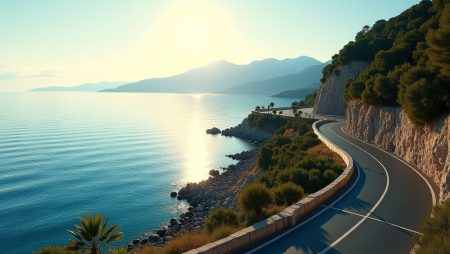
The Pelješac Bridge takes you from Orebić to the mainland in 10 minutes. From there, Dubrovnik is about an hour south along a coastal road that hugs the cliffs, with the Elaphiti Islands glittering offshore.
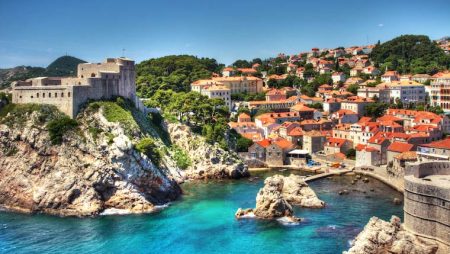
Dubrovnik is the crown jewel — the walled city that launched a thousand Game of Thrones location tours. It’s also expensive, crowded, and in August, borderline overwhelming. The trick is to time your Old Town visits for early morning (before 9 AM) and late evening (after 6 PM), when the day-trippers and cruise ships have thinned out.
Walk the walls (€35, 90-minute circuit), then ride the cable car up Mount Srđ (€27 return) for the definitive view: the terracotta rooftops of the Old Town, Lokrum Island, and the open Adriatic stretching to the horizon. The Homeland War Museum in the Napoleonic fortress at the top is small but sobering — Dubrovnik was shelled heavily in 1991–92, and the photographs of the Old Town on fire are a stark reminder that this wasn’t always a tourist paradise.
For a swim, skip the crowded Banje Beach and take the 15-minute ferry to Lokrum Island (€12 return). The island is a nature reserve with rocky swimming spots, a Benedictine monastery, peacocks wandering around, and a small salt lake called the Dead Sea (it’s not, but it’s warm and buoyant). The last ferry back is at 8 PM — don’t miss it, or you’re sleeping with the peacocks.
For dinner, avoid the Stradun tourist traps. Go to Taj Mahal on Nikole Gučetića in the Old Town — a Bosnian restaurant that does ćevapi (grilled minced meat sausages, €9), burek (flaky meat pie, €5), and baklava that’s better than anything you’ll find on the main drag. It’s tiny, it doesn’t take reservations, and the queue starts forming around 7:30 PM. Worth it.
Making It Happen with Cro Car Hire
A Croatia road trip of this scale — Istria to Dubrovnik, with islands — requires a reliable car, flexible pickup and drop-off, and a company that understands the terrain. Cro Car Hire offers one-way rentals across all major cities (Zagreb, Pula, Split, Dubrovnik), unlimited mileage as standard, and vehicles equipped for the job: air conditioning is non-negotiable in July, and you’ll want a car with enough ground clearance for the occasional gravel road to a hidden cove.
Book in advance for summer (June–September). The best cars go early, and prices rise closer to the date. A Croatia road trip is one of Europe’s last great driving adventures — open roads, empty beaches if you know where to look, and food that rewards the effort of finding it. The only question is how long you can take off.