
Explore Split, Croatia with a Car Rental: The Top Spots to Visit
Split Is Not Just Diocletian’s Palace
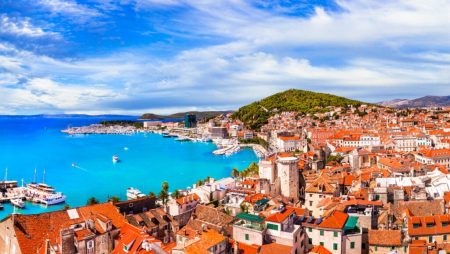
Let’s get this out of the way. Yes, Diocletian’s Palace is extraordinary. A Roman emperor’s retirement home that became a living city — 1,700 years of continuous habitation inside walls built for a dying empire. You’ll walk through the Peristyle, you’ll have a coffee in the Vestibule, you’ll climb the bell tower. Good. Done. Now get in the car.
Split is Croatia’s second-largest city and the transport hub of central Dalmatia. The ferry port connects to Brač, Hvar, Vis, Šolta, and Korčula. The A1 motorway links it to Zagreb in three and a half hours. But the real value of Split as a car rental base is what lies within a 90-minute drive radius. Roman ruins, river canyons, mountain roads, and islands accessible by short ferry crossings that your rental car can board. A car hire Split unlocks all of it.
Cro Car Hire operates right in Split, which means you pick up the car and you’re on the road within 20 minutes of landing or disembarking. The city’s traffic is annoying — the Poljička cesta is perpetually jammed at rush hour and the one-way system around the palace is medieval in the worst way. But you’re not here to drive in Split. You’re here to leave Split and come back when you feel like it.
Klis Fortress: Game of Thrones, Real History, and the Best View
Twelve kilometres northeast of Split, Klis Fortress sits on a limestone ridge at 360 metres. It controlled the pass between the Mosor and Kozjak mountains for two thousand years. The Ottomans held it. The Venetians took it. The Uskoks — Dalmatian irregular soldiers who were basically state-sponsored pirates — used it as a base to raid Ottoman territory. This place has proper history, not just a brief appearance as Meereen in Game of Thrones.
Drive up through the village of Klis. The road is narrow but good. Park at the small lot below the fortress walls (€5 entry, bring cash). From the ramparts you see all of Split, the Kaštela Bay, and the islands of Brač and Šolta stretching to the horizon. On a clear day the view reaches Hvar. The fortress is unrestored enough to feel real — rough stone, lizards on the walls, the constant wind that funnels through the pass. It’s an hour well spent and it gets you oriented. From up here you understand the geography of the entire central Dalmatian coast. That’s useful when you’re planning where to drive next.
The Kaštela Riviera: Seven Villages, One Coastline
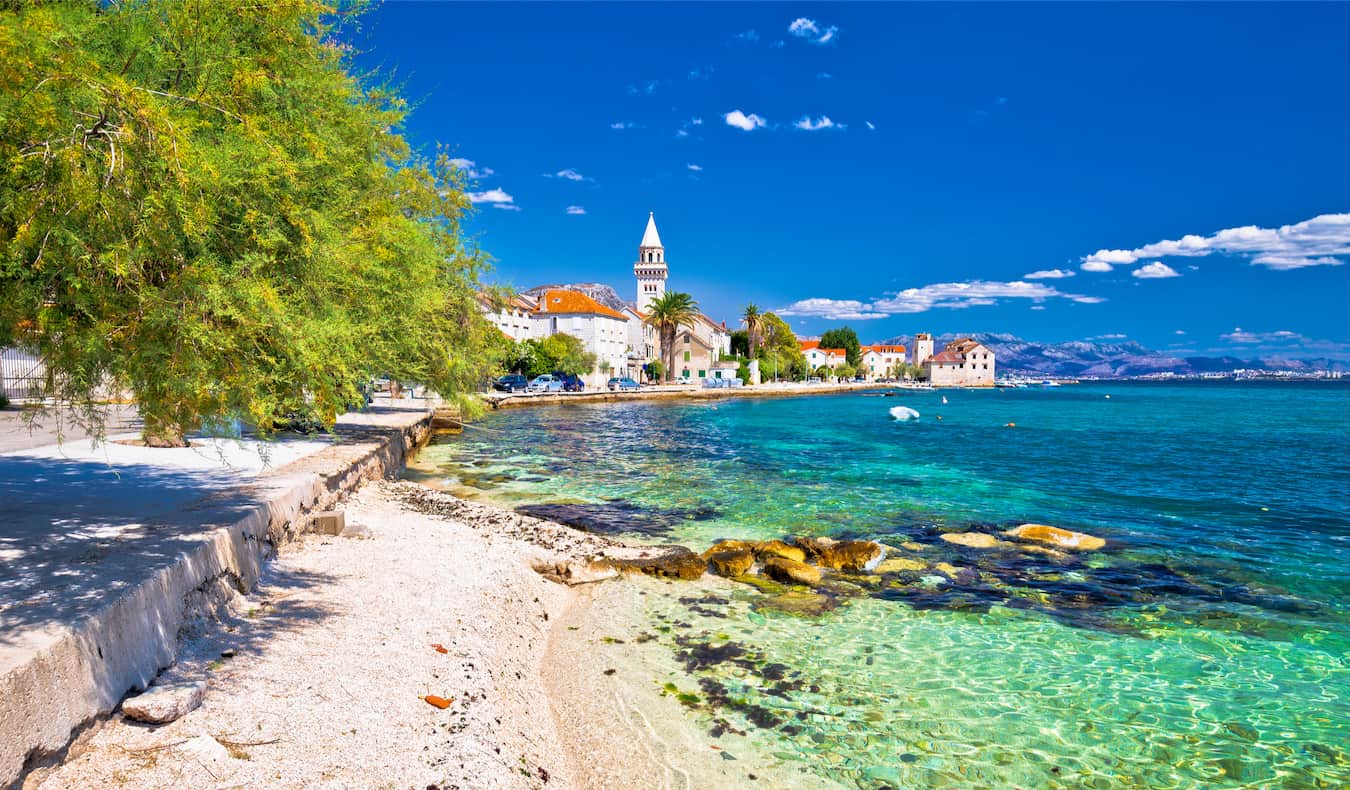
Between Split and Trogir stretches the Kaštela Riviera — seven villages named after castles (kaštel means castle) built by Split’s nobility between the 15th and 17th centuries. Kaštel Gomilica, Kaštel Kambelovac, Kaštel Lukšić. The castles sit right on the water, some built on artificial islands connected by drawbridges that have long since been replaced by stone causeways.
This is local Dalmatia, not tourist Dalmatia. The beaches are pebbly and quiet. The beach bars serve žuja beer for €2.50. The waterfront promenade runs continuously for about 15 kilometres — park the car anywhere and walk a stretch. Kaštel Gomilica is the standout. Its castle was built by Benedictine nuns in 1545 and sits on a tiny islet. Walk out at sunset and you’ll wonder why you’ve never heard of this place.
Trogir: The Island City You Can Drive To
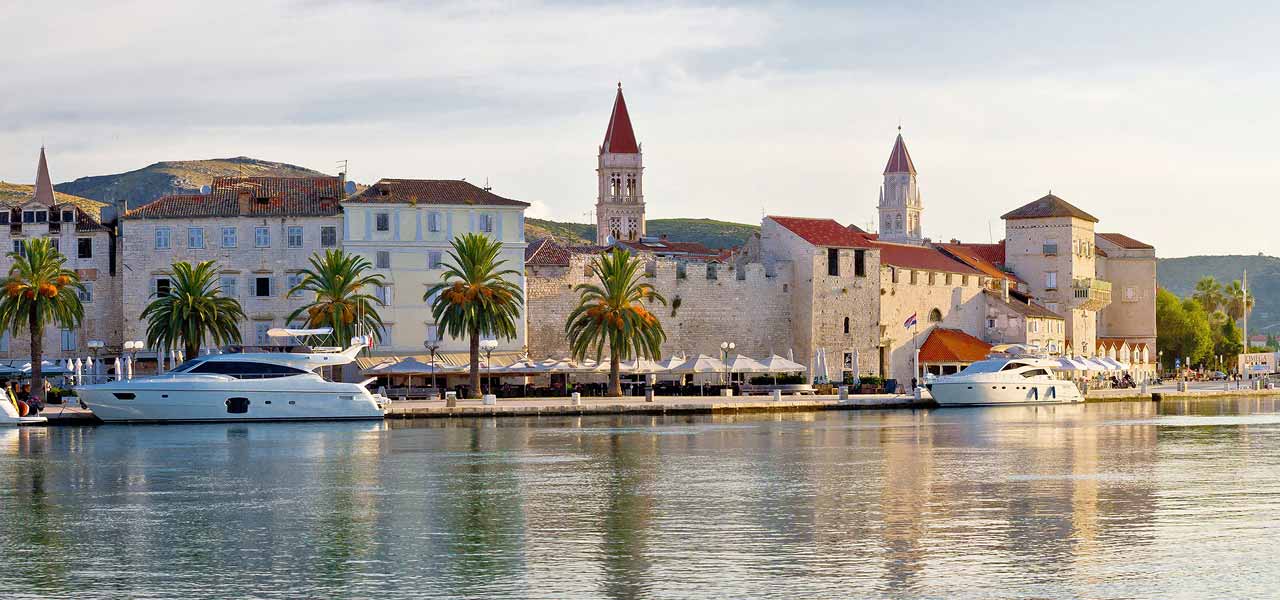
Trogir is 30 kilometres west of Split, connected to the mainland by a bridge and to Čiovo island by another. The old town occupies a small island between the two. UNESCO listed the entire historic core in 1997 and the description fits: a perfectly preserved Venetian-era town with Romanesque, Gothic, Renaissance, and Baroque buildings stacked on top of each other like geological strata.
Park on Čiovo island — there’s a large public lot near the bridge, about €1.50 per hour — and walk across. The Cathedral of St. Lawrence has Radovan’s Portal, a 1240 Romanesque doorway carved with scenes from the life of Christ that art historians lose their minds over. You don’t need to know any of that. Just look at it. The craftsmanship after nearly 800 years of salt air and weather is astonishing.
The Kamerlengo Fortress at the western tip of the island is worth the climb. From the top you see the marina, the Čiovo bridge, and the Split channel. Concerts happen here in summer and the acoustics inside those 15th-century walls are something else.
Cetina River Canyon: Rafting, Zip-lines, and the Dalmatian Interior
Most visitors to Split never leave the coast. Their loss. The Dalmatian interior — the Zagora — is a different Croatia entirely. Karst limestone, sleepy villages, and the Cetina River cutting a deep canyon through the rock on its way to the sea at Omiš.
Drive the D1 inland from Split toward Sinj. Forty-five minutes and the coast feels like a different country. The landscape opens into a high plateau ringed by mountains. Sinj itself is known for the Alka, a 300-year-old knights’ tournament held every August where horsemen in traditional costume try to lance a metal ring. The rest of the year it’s a quiet market town with one of the best bakeries in the county — Pekara Sinj, right on the main square. Try the burek sa sirom.
From Sinj, follow signs to the Cetina canyon. The rafting put-in is near Čikotina Lađa, about 15 minutes south. The river runs about 10 degrees colder than the sea and the canyon walls rise 150 metres on either side. A three-hour rafting trip costs around €35 per person and ends near Omiš, where the river meets the Adriatic. If you’ve got a second car or arrange a pickup, it’s logistically simple. If not, book through an agency that handles the return transfer.
The zip-line at the canyon mouth is the other way to experience it — eight wires spanning up to 700 metres across the gorge, suspended 200 metres above the river. €55 per person. Worth every kuna the old currency used to cost.
Omiš: Pirates, Cliffs, and the Best Pizza on the Coast
Omiš sits at the mouth of the Cetina, 25 kilometres southeast of Split. In the 13th and 14th centuries it was a pirate stronghold. The Omiš pirates operated fast ships called sagittas and controlled shipping between Split and Dubrovnik so effectively that the Pope had to call a crusade against them. Twice.
The pirate fortress of Mirabella still stands on a cliff above the town, and the view from the top — after a 20-minute climb — takes in the entire Omiš Riviera, the Cetina canyon mouth, and Brač island. The town itself has a proper sand beach at the river mouth (rare in Croatia, where pebbles dominate) and a compact stone centre that gets lively on summer evenings.
Eat at Bastion, a pizza and grill place tucked into the old town walls. The pizza oven is wood-fired and the terrace overlooks the river. A margherita costs about €8 and it’s as good as anything you’ll find in Naples. The owner’s grandfather was a fisherman. The seafood risotto proves it.
Sustipan and Marjan: Split’s Green Lungs
You don’t have to drive far to find peace near Split. Marjan Hill is the forested peninsula that rises west of the old town. The road winds up past the Jewish cemetery and the 13th-century Church of St. Nicholas to a viewpoint at 178 metres. From there you see the entire Split archipelago. It’s a five-minute drive from the Riva. Go at dawn and you’ll have it to yourself, plus the pine scent and the sound of cicadas.
Sustipan is the cliffside park at the western edge of the harbour. It used to be a cemetery — the gravestones were moved in the 20th century but the cypress avenues remain. Bring a coffee from the kiosk on the Riva, sit on the sea wall, and watch the ferries slide out toward Brač. These are the moments that make a car rental in Split worthwhile, because you can escape the city in ten minutes and find silence.
Day Trips That Are Genuinely Worth the Drive
Šibenik and Krka National Park (1 Hour from Split)
Šibenik is 80 kilometres northwest of Split along the A1 motorway. It’s smaller than Split, less touristy, and home to the Cathedral of St. James — a UNESCO site built entirely of stone without any mortar or wooden supports. The construction took over a century (1431–1535) and the result is a fusion of Gothic and Renaissance styles that shouldn’t work but absolutely does. The frieze of 71 stone heads on the exterior — portraits of Šibenik citizens from the 15th century — is worth the drive alone.
Krka National Park is 15 kilometres inland from Šibenik. Unlike Plitvice, you can swim here — specifically at Skradinski Buk, the main cascade where the Krka river drops 45 metres over 17 travertine steps. The water is cold, the current is gentle, and the surrounding boardwalk trails take you through waterfalls and forest. Entry is €20–30 depending on season. Go early. By 11 a.m. in July the paths are a conga line.
Imotski Lakes: Blue and Red (1 Hour 15 from Split)
The Imotski region sits inland near the Bosnian border. Modro Jezero (Blue Lake) and Crveno Jezero (Red Lake) are karst sinkholes filled with water. Blue Lake is about 100 metres deep and you can climb down to swim. Red Lake is deeper — around 287 metres — with vertical cliffs that make it the deepest sinkhole lake in Europe. You can’t access the water but the viewpoint from the rim is vertigo-inducing and spectacular. The road from Split climbs through the Biokovo foothills into a landscape of stone fields and occasional vineyards. It feels remote. It’s an hour and a quarter from the coast. Very few tourists make this drive. That’s the appeal.
Connecting to the Wider Croatian Road Trip
Split sits in the middle of the Adriatic coast, which makes it the natural hub for a longer road trip. Head south along the D8 and you hit the Makarska Riviera, Pelješac, and Dubrovnik. North takes you to Šibenik, Zadar, and eventually Rijeka and Istria. A Croatia coastal drive linking Split to car hire Dubrovnik in the south and rent a car Rijeka in the north gives you the full Adriatic experience — Roman ruins, Venetian towns, Habsburg port cities, and a coastline that changes character every 100 kilometres.
The ferry connections from Split also let you island-hop with your rental. Jadrolinija car ferries run to Brač (Supetar, 50 minutes), Hvar (Stari Grad, 2 hours), and Vis (2 hours 30). Book ahead in summer. Showing up at the port in August without a reservation is a gamble you’ll probably lose. A car on an island means empty beaches that the day-trippers can’t reach and konobas in inland villages that don’t appear in any guidebook. The ferry costs €30–50 each way for a car and driver. It’s the best value upgrade to any Split rental.
Split rewards the driver who treats the city as a base, not a destination. Pick up your car, spend a morning in the palace, and then go. The road is waiting and the coast is long.