
Best Day Trips from Zagreb by Car
Why Zagreb is the Perfect Base for Road Trips
Most people fly into Zagreb, spend a night, then immediately head for the coast. Big mistake. Croatia’s capital is surrounded by some of the country’s most interesting and least-visited regions, and having a car opens all of it up in a single day trip.
Within an hour’s drive, you can be at waterfalls bigger than Niagara’s, medieval castles perched on hilltops, thermal spas, wine regions, and even a taste of Slovenia if you’re feeling ambitious. And unlike the coast in summer, these places still feel genuinely local — you’ll hear more Croatian than English.
Here are my top picks for day trips from Zagreb by car, all easily doable in a day and worth every kilometre.
Plitvice Lakes National Park
Let’s get the obvious one out of the way first. Plitvice is Croatia’s most visited attraction for a reason — 16 terraced lakes connected by waterfalls, surrounded by forested mountains. It’s spectacular, it’s UNESCO-listed, and it’s about two hours from Zagreb.
Driving details: 130km from Zagreb, about 2 hours on the A1 motorway to the first exit (Gornja Ploča), then local roads to the park.
Best strategy: Arrive before 8am if you’re visiting in summer. The park gets packed by midday, and you’ll spend your time dodging tour groups. Early morning, you might have the upper lakes almost to yourself.
How long to spend: Plan 4-6 hours minimum. There are several routes through the park, ranging from 2-hour walks to full-day hikes. The classic route (Program A) takes about 3-4 hours and covers the highlights.
Don’t miss: The Great Waterfall (Veliki Slap), at 78m the highest in Croatia. Also, take the boat across Lake Kozjak — it’s included in your ticket and a nice break from walking.
Samobor: Cream Cakes and Medieval Charm
If you want a low-stress day trip that still feels like you’ve been somewhere, Samobor is perfect. This small town 20km west of Zagreb is famous for one thing: kremšnita, a cream cake that’s been made to the same recipe since the 1920s.
Driving details: 25km from Zagreb, 30-40 minutes on local roads.
Start at the main square and wander the old town — colourful facades, a medieval church, and a genuine small-town atmosphere. Then walk or drive up to the ruins of Stari Grad (Old Town Samobor), a 13th-century fortress that was destroyed by the Ottomans and never rebuilt. The ruins are dramatically perched on a hill, and it’s free to explore.
But let’s be honest — you’re here for the cake. The place to go is Samoborska Kremšnita on the main square. It’s been serving them forever, and there’s usually a queue. The cake itself is layers of puff pastry and custard, dusted with powdered sugar. Eat it there — it’s nowhere near as good takeaway.
Combine with: If you have time, drive another 15km to Žumberak Nature Park. It’s a hilly, forested region right on the Slovenian border with hiking trails, rural villages, and excellent views back toward Zagreb.
Trakošćan Castle
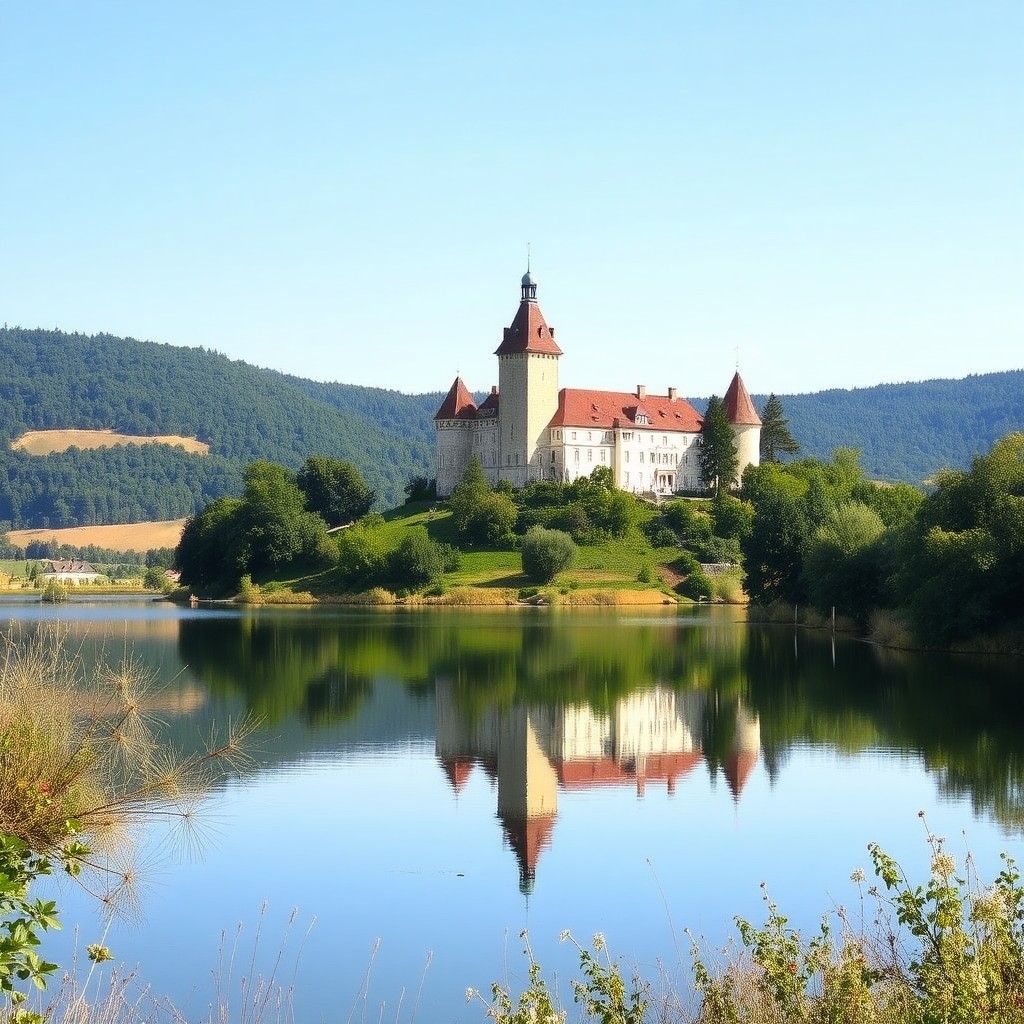
Ever wanted to see a fairytale castle that looks exactly like a fairytale castle should? Trakošćan is it. A 13th-century fortress rebuilt in the 19th century as a romantic residence, complete with turrets, a drawbridge, and a reflection in the surrounding lake.
Driving details: 80km north of Zagreb, about 1 hour 15 minutes via the A2 motorway.
The castle is now a museum with period furnishings, weapons, and portraits. It’s atmospheric rather than comprehensive — you’ll go through it in about 45 minutes. The real draw is the setting. The castle sits on a hill overlooking an artificial lake, surrounded by forest. There’s a walking path around the lake (about 45 minutes) that gives you the classic postcard views of the castle reflected in water.
Combine with: The nearby town of Varaždin, Croatia’s baroque former capital. It has one of the best-preserved old towns in the country, plus a castle of its own and excellent restaurants. Varaždin is worth a day trip in itself, but you can see both in a long day.
Kumrovec: The Open-Air Museum
For something completely different, head to Kumrovec in the Zagorje region. This is the birthplace of Josip Broz Tito, Yugoslavia’s longtime leader, and it’s been preserved as a memorial to rural Croatian life in the late 19th and early 20th centuries.
Driving details: 45km north of Zagreb, about 50 minutes via local roads.
The star attraction is the Staro Selo (Old Village) open-air museum — a collection of traditional wooden houses, barns, and workshops moved here from across the region. It’s genuinely fascinating to walk through: black kitchens, low ceilings, original furniture. You get a real sense of how people lived (and how hard that life was).
Tito’s birth house is here too, preserved with period furniture and photos from his life. Whatever your politics, it’s an important piece of 20th-century history.
The Zagorje region is also known for thermal spas. Tuhelj Spa is 15 minutes away if you want to end the day with a soak.
Varaždin: Baroque Elegance
Mentioned above but worth its own entry. Varaždin was Croatia’s capital in the 18th century, and it shows. The old town is a perfectly preserved baroque ensemble — pastel-coloured facades, ornate churches, and a castle that houses the city museum.
Driving details: 80km north of Zagreb, about 1 hour via the A4 motorway.
The Varaždin Cemetery sounds like an odd attraction, but it’s genuinely beautiful. Laid out in the 18th century as an English-style park, with massive trees and sculptural monuments. If you’re there in spring when the magnolias bloom, it’s stunning.
The city hosts the Špancirfest in late August/early September — a street festival with music, food, and performances throughout the old town. It’s one of Croatia’s best festivals if you can time your visit.
Ozalj and the Kupa River
This is the trip for people who like scenic drives. Ozalj is a small town on the Kupa River, about 50km southwest of Zagreb, with a dramatically situated castle and some of the prettiest river scenery in inland Croatia.
Driving details: 50km from Zagreb, about 1 hour via the D1 then local roads.
Ozalj Castle sits on a rock promontory where the Kupa and Dobra rivers meet. It’s been rebuilt multiple times — medieval fortress, Renaissance residence, 18th-century additions. The interior is now a museum with paintings, furniture, and archaeological finds.
The drive itself is half the attraction. The road follows the Kupa River through forested hills, passing small villages and swimming spots. In summer, locals flock to the river beaches — clear water, gravel banks, and shade from the surrounding trees.
Mužej hrvatskog šumarstva (Museum of Croatian Forestry) in nearby Lipovljani is a surprisingly interesting stop if you’re into industrial heritage. Otherwise, just enjoy the drive.
Zagorje Wine Route
Croatia’s northwest hills are one of its oldest wine regions, and a day trip here combines scenery, history, and plenty of tasting opportunities. The main grapes are Šipon (Furmint) and Graševina — fresh, acidic whites that pair perfectly with the region’s heavy peasant food.
Driving details: 40-60km from Zagreb depending on which wineries you visit.
Wine production here is small-scale and family-run. Some of the better-known producers include Vina Jagunić in Donja Voća and Vina Jakopić. Call ahead — many don’t have regular tasting room hours.
The landscape is gentle hills, orchards, and vineyards. It feels nothing like the coast — greener, more central European, with church spires on every hilltop. Stop for lunch at a rural konoba and try the traditional dishes: purica s mlincima (turkey with a bread side dish) or zagorski štrukli (cheese-filled pastry).
Slovenian Border: Čatež Thermal Spa
Technically this is Slovenia, but it’s close enough to Zagreb (30km) that it works as a day trip. The Terme Čatež is one of the largest thermal spa complexes in this part of Europe, with indoor and outdoor pools, water slides, and wellness facilities.
Driving details: 30km from Zagreb, about 40 minutes. You’ll cross the Slovenian border, so bring your passport.
This isn’t a charming historic experience — it’s a full-on water park with thermal springs. Great for families, or if you just want to soak in hot water surrounded by gardens. The outdoor pools are lovely in summer; the indoor complex is perfect in winter.
Planning Your Zagreb Day Trips
Car Hire Tips
Hiring a car in Zagreb is straightforward — the airport has all the major brands, and there are city locations too. For day trips, a compact is fine — the roads are good, and parking in small towns is easier with a smaller vehicle. Book ahead in summer.
Best Season
April to October is ideal for most trips. Plitvice is beautiful in every season, but the waterfalls are most dramatic in spring (snowmelt) and autumn (rainy season). Thermal spas are year-round. Wine tasting is best in late summer/autumn during harvest.
Driving Conditions
Roads are generally excellent — Croatia has invested heavily in infrastructure. The main motorways (A1, A2, A4) are toll roads and fast. Rural roads are slower but scenic. Watch for cyclists on weekends, especially on routes popular with Zagreb cycling clubs.
Budget Time
These trips are easy drives, but don’t underestimate how long things take. A “two-hour” trip to Plitvice means four hours in the car total, plus park time. Build in buffer time for meals, photos, and unexpected stops — the best discoveries happen when you’re not rushing.
The Bottom Line
Zagreb is one of Europe’s most underrated cities, and the surrounding region is even more overlooked. With a car, you can explore mountains, lakes, castles, wine regions, and historic towns — all within an hour or two of the capital, and all without the summer crowds of Split or Dubrovnik.
Ready to start exploring? Check out our guide to car hire in Zagreb for the best options with no hidden fees. If you’re extending your trip to the coast, we’ve also got you covered for car hire in Dubrovnik and car hire in Split. See all our locations at the 365 Car Hire directory.