
The Ultimate Dubrovnik to Split Road Trip
Why the Dubrovnik to Split Drive is Croatia’s Best Coastal Road Trip
If there’s one drive that captures everything magical about Croatia, it’s the journey from Dubrovnik to Split. You’ve got medieval walled cities, island-hopping ferries, secluded beaches, and some of the clearest water you’ll ever see. The whole thing takes about three hours if you hammer it on the highway, but that’s missing the point entirely.
The real way to do this drive? Give yourself two or three days. Stop in towns you’ve never heard of. Take the slow coastal road instead of the new bridge. Swim in bays that don’t have names on maps. That’s how you experience the Dalmatian coast properly.
I’ve driven this route more times than I can count, and I still find new places to stop. Here’s everything you need to know for your Dubrovnik to Split road trip.
The Classic Route: Coastal vs Highway
There are two main ways to get from Dubrovnik to Split:
The Highway (A1): Take the new Pelješac Bridge north, then join the A1 motorway near Opuzen. Fast, efficient, tolls. You can do the full drive in 3-3.5 hours. But you’ll miss the best scenery.
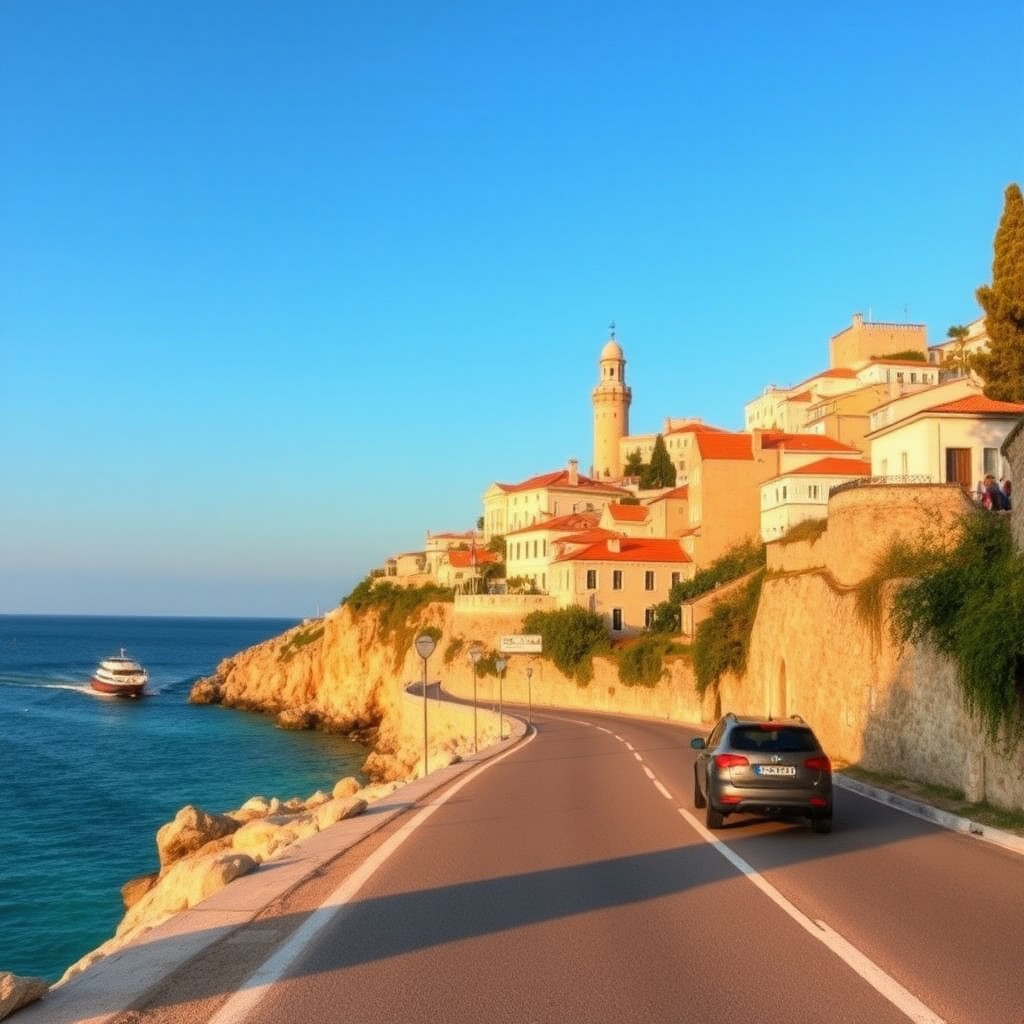
The Coastal Road (Jadranska Magistrala, D8): The old-school route that winds through every coastal town. Slower (4-5 hours without stops), more nerve-wracking in places, but infinitely more rewarding. This is the road trip.
My advice? Do both. Take the coastal road north, stop a bunch of times, then take the highway back if you’re doing a round trip. Or if you’re one-way, just accept the extra time and enjoy the views.
Essential Stops on Your Dubrovnik to Split Road Trip
Ston and the Great Wall of Europe
Just 60km north of Dubrovnik (about an hour’s drive), Ston is one of those places that surprises everyone. The town is guarded by 5km of medieval walls, the longest defensive structure in Europe after Hadrian’s Wall. They were built by the Republic of Dubrovnik to protect its salt pans, which are still producing salt today using traditional methods.
Park at the main lot and walk part of the walls — the views over the salt flats and oyster beds are stunning. The town itself has excellent seafood restaurants serving locally farmed oysters and mussels. If you’re here in summer, the beaches on the Pelješac side of the channel are quiet and beautiful.
Driving time from Dubrovnik: 50-60 minutes
Neum: The Bosnia-Herzegovina Strip
Here’s something that confuses first-time visitors: the coastal road passes through Bosnia-Herzegovina for about 20km. This is Neum, Bosnia’s only access to the sea. You’ll need your passport — there are border crossings at both ends of the strip.
The good news? The crossings are usually quick, especially outside peak summer. The better news? Fuel and cigarettes are cheaper here, so it’s a popular stop. The town itself has a resort vibe with big hotels and beach clubs. Not the most authentic Dalmatian experience, but convenient for a fuel stop.
Note: If you have a rental car, make sure your contract allows transit through Bosnia. Most companies are fine with it, but some restrict it entirely.
Makarska Riviera: Beaches and Mountain Backdrops
After crossing back into Croatia, the road opens up into the Makarska Riviera. This is where the Biokovo mountain range crashes into the sea — dramatic limestone cliffs rising straight up behind pebble beaches. The main town, Makarska, can get crowded in summer, but the smaller towns have a more relaxed feel.
Brela is my pick — it has the famous Punta Rata beach, often voted among the most beautiful in Europe. The water is impossibly clear, and the pine trees provide natural shade. Park anywhere along the coastal road and walk down to the beach.
Baška Voda is another good stop, with a pretty harbour and excellent seafood restaurants.
Driving time from Ston: 2-2.5 hours (coastal road)
Omiš: Pirates, Canyons, and Adventure
The Cetina River gorge at Omiš is one of the most dramatic spots on the entire coast. The town sits where the river cuts through a limestone canyon to reach the sea. Medieval pirates (the Uskoks) used this natural fortress as their base — they could ambush passing ships and disappear up the canyon.
Today, Omiš is Croatia’s adventure capital. You can go zip-lining across the canyon, rafting on the Cetina, or take a boat trip upriver to the Radmanove Mlinice restaurant, which sits at a series of waterfalls. The old town is worth exploring — narrow stone streets, a fortress on the hill, and the massive rock face of Mount Omiš looming overhead.
Driving time from Makarska: 30 minutes
Trogir: A UNESCO Island Town
Just 30 minutes before Split, you hit Trogir. And honestly? Some people like it more than Split. The entire old town is on a tiny island connected by bridges, and UNESCO has designated the whole thing a World Heritage site.
Trogir’s cathedral took 400 years to build, and it shows — a masterpiece of Gothic and Renaissance stonework by local masters. Wander the narrow streets, climb the bell tower for views, and have lunch in one of the many konobas (traditional restaurants) hidden in ancient stone buildings.
Parking can be a nightmare in summer. Use the large lot outside the old town and walk in — it’s only 5 minutes.
Driving time from Omiš: 45 minutes
Split: Your Final Destination
You’ve made it. Split is Croatia’s second-largest city and the heart of Dalmatia. The old town is built inside Diocletian’s Palace — a 1,700-year-old Roman structure where people still live, work, and drink coffee in ancient cellars.
Spend at least a day here. Walk the palace cellars (best preserved in the world), climb the bell tower of St. Domnius Cathedral, browse the stalls on the Riva waterfront, and take the ferry to nearby islands if you have time. Split is also the main ferry hub for Hvar, Brač, and Vis — all world-class island destinations.
Practical Driving Tips for the Dubrovnik-Split Route
Road Conditions
The coastal road (D8) is generally in good condition, but it’s narrow and winding. You’ll be sharing the road with trucks, buses, and erratic local drivers. Take your time, pull over to let faster traffic pass, and don’t even think about rushing.
Tolls and Border Crossings
If taking the A1 highway, expect about €8-10 in tolls. The Neum border crossing (Bosnia) is free but requires your passport. Summer weekends can see long queues — avoid crossing on Saturday mornings or Sunday evenings if possible.
Parking in Coastal Towns
Summer parking is the bane of Dalmatian road trips. Arrive early (before 10am) in popular towns, or be prepared to park far from the centre and walk. Most towns have pay-and-display machines — carry coins and small bills.
Fuel
Gas stations are plentiful along the main routes. Prices are standardised across Croatia (set by the government), so it doesn’t matter where you fill up. Just don’t wait until you’re nearly empty in remote stretches.
One-Way Car Hire
Most rental companies allow one-way hire between Dubrovnik and Split for an additional fee (usually €30-50). This is the most convenient option — fly into one city and out of the other, drive one way, and maximise your time.
Best Time for This Road Trip
May, June, September, October: Ideal. Warm but not hot, fewer crowds, cheaper accommodation, and all the roads and attractions are open.
July and August: Hot, crowded, and expensive. But this is peak season for a reason — everything is open, the water is bath-warm, and the nightlife is at its best. Book accommodation well ahead.
November to April: Quieter and cheaper, but many coastal restaurants and hotels close for the season. Some island ferries reduce their schedules. Weather can be rainy.
The Bottom Line
Driving from Dubrovnik to Split isn’t just about getting from A to B. It’s about the stone villages, the hidden beaches, the konobas serving grilled fish caught that morning. Take your time. The Adriatic will still be there when you arrive in Split, and you’ll have a trunk full of memories from the journey.
Need a car for your Croatian adventure? Check out our guides to car hire in Dubrovnik and car hire in Split for the best options with no hidden fees. We’ve also got you covered for car hire in Zagreb if you’re extending your trip inland. For a full list of Croatian locations, see our complete car hire directory.