
Explore Croatia in Style with Car Hire from Zagreb Airport for a Road Trip to Dubrovnik
The Ultimate Croatian Road Trip Starts Here
There’s a particular feeling you get when you step out of Franjo Tuđman Airport, keys in hand, with the whole Adriatic coast stretched out in front of you. No transfers, no bus tickets, no negotiating with taxi drivers who quote one price and charge another. Just you, the open road, and about 600 kilometres of some of the most dramatic scenery in Europe.
With Zagreb Airport car rental from Cro Car Hire, this isn’t a fantasy. We have a dedicated desk at the airport (you’ll find us in the arrivals hall, just past baggage claim), and our fleet covers everything from fuel-efficient hatchbacks for solo travellers to spacious SUVs for families with luggage. Pick up, adjust the mirrors, and go.
This guide maps out the full Zagreb-to-Dubrovnik route, with stops worth making along the way. You can do it in a day if you’re on a mission, but that would be missing the point. Give yourself three to five days, and Croatia will reward you.
The Route Decision: A1 Motorway vs. D8 Coastal Road
Your first choice comes immediately: the fast road or the scenic road. Both have merit.
The A1 Motorway (Inland Route)
Croatia’s A1 — the “Dalmatina” — is a modern toll motorway that cuts inland from Zagreb through Karlovac, past Plitvice (sort of), and down to the coast near Zadar. From there it hugs the interior, passing Šibenik and Split before terminating near Ploče. The A1 is fast, well-maintained, and dramatically engineered — viaducts that soar over valleys, tunnels that punch through mountains. You’ll cover Zagreb to Split in about four hours, and Zagreb to Dubrovnik (via the Pelješac Bridge) in roughly six.
Tolls run around €25 from Zagreb to Split and another €5 or so from Split to Ploče. Pay at booths with cash or card. The motorway is largely empty outside of July and August weekends, when the diaspora returns and traffic thickens around the tunnels near Sveti Rok.
The downside: you miss the coast. The A1 runs 10–20 kilometres inland for most of its length. You’ll glimpse the sea occasionally, but you won’t smell it.
The D8 (Jadranska Magistrala)
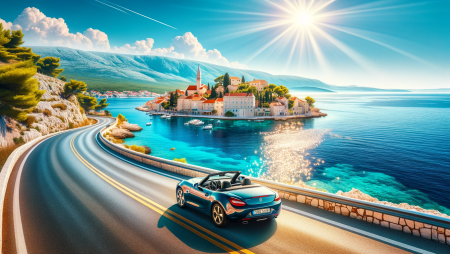
The D8 is the old coastal road, commissioned by the Austrians in the 19th century and upgraded in Tito’s era. It snakes along the shoreline from Rijeka all the way to Dubrovnik, squeezing between the sea and the Dinaric Alps. It’s slower — expect to average 50–60 km/h — but every bend brings another view that makes you want to pull over.
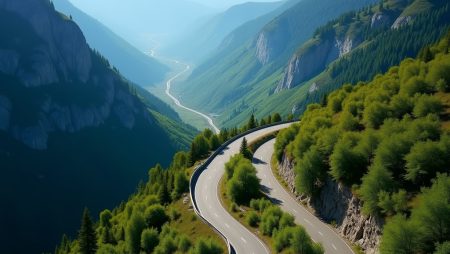
The D8 is not a road for tight deadlines. Sections around the Velebit mountain are winding and narrow; in summer, you’ll get stuck behind campervans. But it’s also the road that takes you through towns like Senj, Karlobag, and Makarska, where the mountains plunge so steeply into the sea that the town feels like it’s clinging on by its fingernails.
Our recommendation: take the A1 south to Zadar, switch to the D8 for the coastal stretch from Zadar to Split, then choose based on mood and schedule. The A1 is the smart choice when you need to cover ground; the D8 is the right choice when the journey is the destination.
Stop One: Zadar — Sea Organ and Roman Ruins
Zadar is about three hours from Zagreb on the A1, and it’s the logical first stop if you’re pacing yourself. The old town sits on a small peninsula, ringed by Venetian walls that are a UNESCO World Heritage site. Park at the public garage at Liburnska Obala (about €1.50 per hour) and walk in.
Two things will stick with you after Zadar. The first is the Sea Organ — a set of polyethylene pipes embedded under marble steps on the Riva, tuned so that the movement of the waves produces a haunting, whale-song drone. It was designed by architect Nikola Bašić in 2005, and it’s the kind of public art that actually works: people gather at sunset, sit on the steps, and listen. No tickets, no queue, no closing time.
Directly next to the Sea Organ is the Greeting to the Sun — a 22-metre disc of solar panels that absorbs light during the day and puts on a trippy LED show after dark. It’s cheesy in the best way.
The Roman Forum, built between the 1st century BC and the 3rd century AD, is the largest on the eastern Adriatic. It’s an open-air ruin that you can walk through for free. The Church of St. Donatus, a 9th-century pre-Romanesque rotunda, sits right in the middle of it.
For food, skip the Riva restaurants (overpriced, mediocre) and walk five minutes inland to Konoba Rafaelo on Varoška. Fresh fish, grilled squid, house wine served in a carafe. A full meal for two runs about €40. For coffee, Kavana Danica on Narodni Trg has been a Zadar institution since the 1970s.
Stop Two: Split — Diocletian’s Living Palace
Split is another 90 minutes south of Zadar on the A1, or about two hours if you take the D8. Unlike most ancient sites, Diocletian’s Palace isn’t a roped-off ruin — it’s a living neighbourhood. The 4th-century Roman emperor’s retirement home was repurposed over the centuries into a warren of apartments, shops, and cafes. You can have a beer inside a Roman courtyard. You can book an Airbnb in a 1,700-year-old building.
Park at the Sustipan lot on the western edge of town (€1.20/hour) or the larger garage at Dragovode. Don’t try to park inside the old town — it’s pedestrianised and the few access roads are guarded by bollards.
Walk the Riva promenade, duck into the substructures of the palace (€7 entry), and climb the cathedral bell tower (€10) for a view over the terracotta rooftops and the islands beyond. Marjan Hill, the pine-forested peninsula just west of the old town, has walking trails and quiet coves for swimming — a good antidote to the old-town crowds.
For breakfast, go to Brasserie on 7 on the ground floor of the Hotel Vestibul Palace — it’s inside the actual palace walls, and the eggs Benedict (€10) comes with a side of history. For dinner, Bokeria on Domaldova does Mediterranean small plates in a converted industrial space; the tuna tartare is reliable.
Stop Three: Pelješac Peninsula — Oysters and Red Wine
This is the stretch where the road trip gets genuinely special. From Split, rejoin the A1 south to the Ploče exit, then follow the signs for the Pelješac Bridge — a 2.4-kilometre cable-stayed span that opened in July 2022 and finally connected southern Dalmatia to the rest of Croatia without a border crossing through Bosnia. The bridge itself is an experience: 98 metres of clearance at its highest point, with views of the Neretva delta and the Elaphiti Islands spreading out below.
Pelješac is a long, narrow peninsula that does two things better than anywhere else in Croatia: oysters and red wine.
For oysters, drive to Mali Ston, a tiny fortified village at the base of the peninsula. The bay here has been farmed for oysters and mussels since Roman times. Restaurant Bota Šare does a tasting plate — six fresh oysters, a glass of Pošip (the local white), bread — for about €18. The oysters come out of the water that morning, and they taste like the sea in the best possible way: briny, clean, with a hint of sweetness. If you’re feeling indulgent, add the mussels buzara (white wine, garlic, parsley) for another €12.
For wine, follow the peninsula road north toward Potomje. The steep south-facing slopes here are planted almost entirely with Plavac Mali, the indigenous red grape that is genetically a cross between Crljenak Kaštelanski (which is Zinfandel, as it turns out) and Dobričić. The wines are big, tannic, and age-worthy. Stop at the Miloš winery in Ponikve — Frano Miloš is one of the patriarchs of modern Croatian winemaking, and his Stagnum (€25–30 a bottle) is widely considered the benchmark Plavac Mali. The tasting room is rustic and unfussy; call ahead to book.
Further up the road, Saints Hills winery in Radovani is a more polished operation. Their Dingač — from the tiny, sun-blasted appellation of the same name — is one of Croatia’s most collectible wines. Tastings from around €20.
The Final Stretch: Dubrovnik
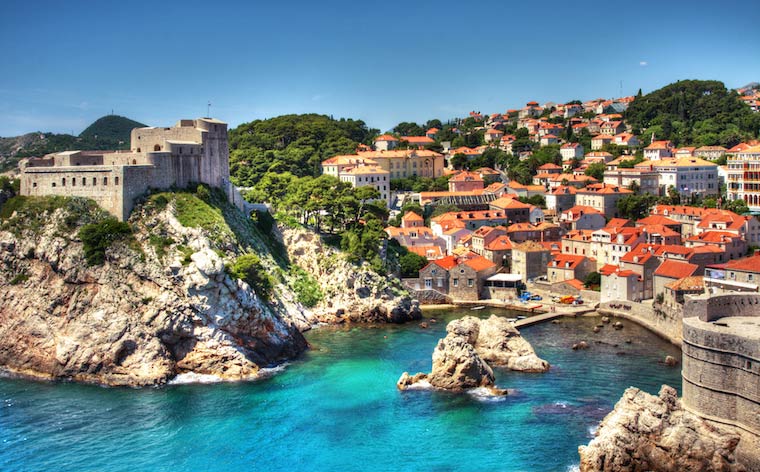
From Pelješac, it’s about 90 minutes to Dubrovnik — first along the peninsula, then across the bridge, then south through a narrow coastal strip that squeezes past the Elaphiti Islands on the left. You’ll see the walls of the Old Town long before you reach them. Park at the Ilina Glavica garage above the city (about €7/hour in summer — Dubrovnik parking is not cheap) and take the shuttle bus or walk down.
Dubrovnik’s Old Town needs no introduction. Walk the walls (€35, but worth it — the full circuit takes about 90 minutes and the sea views from the Minceta Tower are the best in the city), then lose yourself in the side streets. The further you get from the Stradun, the quieter it gets — and the more you realise that Dubrovnik isn’t just a film set but a living city where people still hang laundry from their windows and argue about football in the squares.
For drinks, Buža Bar is the classic choice — a hole in the sea wall with plastic chairs perched on the rocks outside the city walls, serving cold beer with a view of Lokrum Island. For something less touristy, try D’Vino Wine Bar on Palmotićeva, which has the best selection of Croatian wines by the glass in the city.
When you’re ready to head back (or if Dubrovnik was always your destination and you’re flying out from there), Cro Car Hire offers one-way rentals — pick up at Zagreb Airport car rental and drop off in Dubrovnik, or vice versa. No need to double back.
Practical Notes for the Road
Motorway speed limit is 130 km/h; open roads 90 km/h; built-up areas 50 km/h. Speed cameras are common, and on-the-spot fines for tourists are a real thing — Croatian police accept cash for fines from non-residents, and they do not negotiate. Keep your headlights on at all times (mandatory during winter, good practice year-round). The blood alcohol limit is 0.05%.
Fuel stations along the A1 are spaced every 30–40 kilometres. On the D8, they’re less frequent — fill up in major towns and don’t let the tank drop below a quarter. Mobile coverage is excellent throughout the route; Google Maps works reliably, though downloading offline maps is smart for stretches around the Velebit where the signal can drop.
The road from Zagreb to Dubrovnik is one of Europe’s great drives. With Zagreb Airport car rental from Cro Car Hire, it’s also one of the easiest. Pick up at the airport, drop off wherever your journey ends, and spend the days in between discovering a country that deserves more than a flight-and-hotel package.