
Discovering Split and the Dalmatian Coast: A Guide to Hiring a Car at the Split Port
You’ve Docked. Now What?
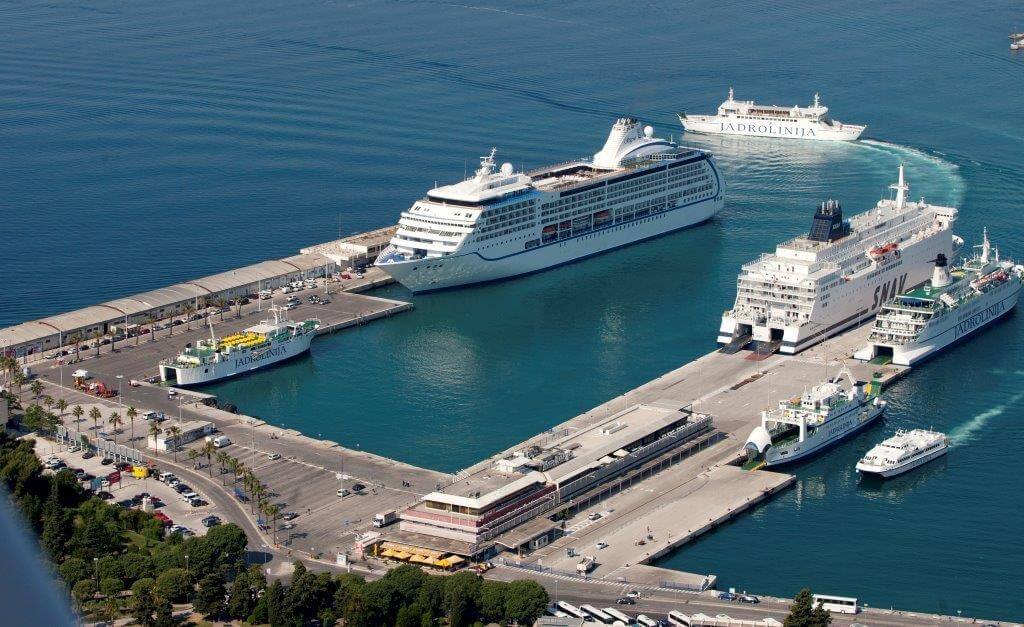
Stepping off a ferry into Split port is one of the best arrivals in the Mediterranean. The Jadrolinija ferry slides past the palm-lined riva, the bell tower of St. Domnius rises behind the palm trees, and you can smell grilled fish from the waterfront restaurants before the gangway even drops. You’ve got your bags, your legs are steady on dry land again, and the whole central Dalmatian coast is waiting. Now you need a car.
This is where most people waste half a day. They drag luggage to the bus station, queue for a ticket, squeeze onto a coach, and spend the next few hours watching the coast through a tinted window they can’t open. Alternatively, they try to piece together an itinerary using local ferries and buses and end up spending more time reading timetables than actually seeing anything.
The better move by a mile: pick up a Dalmatian Coast rental car the moment you dock and drive off the ferry ramp straight onto the open road. Split ferry port sits at Obala Lazareta — the southern side of the harbour basin — and car hire offices are literally across the street. You can be behind the wheel inside fifteen minutes of stepping off the boat.
Our hire car Split location covers the port, the airport, and the city centre — we’ll have your car ready when your ferry pulls in, whether you’re coming from Ancona, Hvar, Brač, Vis, or Korčula.
The Split Port Pickup: How It Actually Works
Split ferry port isn’t a confusing airport terminal with endless corridors and car rental counters hidden in a distant carpark. It’s a waterfront. Your ferry pulls up to the quay, you walk off the ramp, and the car hire office is on Obala Lazareta — the street running along the south side of the harbour. Most rental offices including ours sit between the bus station and the old town, within sight of the ferry berths.
Here’s the practical sequence that nobody spells out. When you book a Dalmatian Coast rental car for port pickup, give us your ferry arrival time and the route — Ancona–Split, Hvar–Split, whichever. The ferries are generally punctual but summer delays happen. We track the arrivals and we’ll have someone at the office when you get there. The paperwork takes ten minutes: driving licence, passport, credit card. The car is parked nearby — if the port-side spots are full we’ll walk you five minutes to a secondary lot.
Your first drive out of the port is straightforward: follow the harbour road west, merge onto the coastal road, and within ten minutes you’ve cleared the city traffic and the Adriatic is on your left. It’s that fast. No shuttle buses, no waiting, no taxi queue in the August heat.
Why a Car Beats the Ferry-Hopping Game
The Croatian islands are spectacular and you should absolutely spend time on Hvar, Brač, or Vis. But ferries dictate your schedule — you leave when the sailing leaves, you come back when it comes back, and you structure your entire day around a boat timetable. With a hire car Split, the mainland opens up on your terms. Go when you want, stay as long as you want, change plans halfway through the day because you saw a sign for a beach you like the look of.
Ferry costs add up fast too. A car ferry from Split to Hvar return with a vehicle is around €100 in summer. If you’ve already island-hopped and are now on the mainland with a rental car, you’re saving that cost on every subsequent day trip. The car pays for itself faster than you think.
If you’re continuing your trip north or inland, our car hire Zadar and car hire Zagreb locations let you do one-way rentals — drop the car at your final destination and fly out from there instead of backtracking.
Split: What to See Before You Drive Out
You’re docked in the centre of everything. The Bronze Gate — the southern entrance to Diocletian’s Palace — is a three-minute walk from the port. You’d be mad not to spend at least an afternoon in Split before hitting the road.
Diocletian’s Palace: The Living Roman City
This isn’t a ruin behind velvet ropes. The palace was built as Diocletian’s retirement home in 305 AD and has been continuously inhabited ever since — seventeen centuries of people living, eating, sleeping, and raising children inside Roman walls. Walk through the substructure cellars (the cool, echoing halls where the emperor’s storage rooms once were), emerge into the Peristyle courtyard with its columns and the Egyptian sphinx, and climb the cathedral bell tower for the view. The whole thing takes two hours and costs less than a round of drinks in the riva cafés.
Park your Dalmatian Coast rental car at the Sukoisan lot near the port — €4 gets you the afternoon and it’s a five-minute walk to the palace. Don’t try street parking near the old town unless you enjoy driving in circles while your passengers get restless.
The Riva: Coffee, People-Watching, Repeat
Split’s waterfront promenade stretches the length of the palace façade. It’s where the city lives — old men play chess on stone tables, families stroll past palm trees, and everyone nurses an espresso for an hour because nobody is in a hurry. Grab a table at one of the café terraces, order a bijela kava (white coffee), and watch the Jadrolinija ferries come and go. You just arrived on one of those — feels good to be on the other side of it now.
Where the Car Takes You: Day Trips from the Port
Trogir: 30 Minutes West
From the port, head west on the coastal road and you’re in Trogir before you’ve finished your first podcast. This UNESCO-listed town on a tiny island is the antidote to Split’s energy — quieter, more polished, all Venetian stonework and marble streets. Park on the mainland side near the bus station, walk across the bridge, and spend the afternoon exploring the Cathedral of St. Lawrence with Radovan’s Portal, the Kamerlengo Fortress, and the waterfront cafés. A car hire Trogir day trip from the port is the easiest outing you’ll make — it’s closer to Split than most people’s daily commute.
Klis Fortress: 20 Minutes Inland
Head north out of the port basin, up the winding road onto the limestone ridge above Split. Klis controls the mountain pass that guarded the city for two millennia — Illyrians, Romans, Ottomans, and Venetians all fought over this spot. The fortress itself is stark stone, but the view from the ramparts is the real prize: the entire Split peninsula, the islands of Brač and Šolta, and on a clear day the mountains of Bosnia in the distance. Your hire car Split from the port gets you up there in twenty minutes. Go in the late afternoon when the light turns golden and the day-trippers have gone back to the city.
Omiš and the Cetina Canyon: 30 Minutes South
South of Split, where the Cetina River cuts through a dramatic gorge to meet the Adriatic, sits Omiš — a former pirate stronghold with a fortress clinging to the cliff face above town. The medieval corsairs of Omiš terrorised Venetian and Ottoman shipping for two hundred years from this natural fortress. Today the pirates are gone but the canyon remains, and the Cetina River runs Class II–III rapids through it. Rafting trips launch from the riverbank ten minutes’ drive inland from Omiš — three to four hours on the water with guides who know every bend. Book a morning departure, get wet in the cold river water, and be back in Split by mid-afternoon with enough time for a swim and a beer.
Makarska Riviera: 1 Hour South
The drive south from Split to the Makarska Riviera on the D8 coastal road is one of the best stretches of asphalt in Croatia. The Biokovo mountain range rises 1,700 metres almost straight out of the sea on your left, the islands of Brač and Hvar sit on the horizon to your right, and between them the Adriatic shimmers in shades of blue that look photoshopped. Towns like Brela (Punta Rata beach regularly makes “best in Europe” lists), Baška Voda, and Makarska itself string along the shore with pine-shaded promenades and family-run konobas serving grilled fish and blitva. Your Dalmatian Coast rental car from the port puts you there in an hour — leave after a morning swim in Split and you’ll be eating lunch on a pebble beach under the Biokovo range by noon.
Krka National Park: 1 Hour North
The A1 motorway runs inland from Split through the karst highlands to the Krka exit, about an hour from the port. Skradinski Buk is the main waterfall complex — seventeen cascades dropping forty-six metres through travertine pools, connected by wooden boardwalks that weave through the spray. Unlike its more famous cousin Plitvice, Krka still allows swimming at the base of the falls (designated area, June to September, bring water shoes — the rocks are sharp). Park at the Lozovac entrance, take the free shuttle down to the falls, and budget three hours to walk the full loop. If you’re continuing north afterwards, our car hire Zadar location is near Krka and works for one-way drop-offs.
Driving South Along the Dalmatian Coast
If your plan after the port pickup is to head toward Dubrovnik, you have two roads and two very different experiences. The A1 motorway is fast and modern — Split to Ploče in ninety minutes, then across the Pelješac Bridge (opened in 2022, a spectacular engineering achievement that bypasses the old Neum corridor through Bosnia) and onward to Dubrovnik. Tolls are reasonable — €10–15 for the Split–Dubrovnik run depending on your exit — and the road is smooth as glass. This is the practical choice if you want to cover distance quickly.
The D8 coastal road — the Jadranska magistrala — is the slow, scenic alternative. It hugs the shoreline, threads through villages, and gives you views the motorway tunnels straight through. The section south of Omiš with Biokovo looming above and the sea below is one of the great driving roads in Europe. It takes twice as long as the motorway. Do it anyway, at least once. A good compromise: motorway down, coastal road back, or the other way round.
From the port itself, getting onto either road is simple: follow the signs for the A1 (inland) or the D8 (coast), and you’re on your way within minutes. No city-centre traffic snarl to fight through — the port empties directly onto the arterial roads.
Practical: Fuel, Tolls, and Road Rules
Fuel stations in Croatia are plentiful along the A1 but sparse on the coastal road south of Makarska — fill up in Omiš or Makarska before heading further south. Toll booths on the A1 take contactless cards and euros (Croatia switched to the euro in January 2023). Keep some coins handy for the tunnel tolls if you take the old coast road inland sections.
Speed limits: 130 km/h on motorways, 90 km/h on open roads, 50 km/h in towns. The police enforce these with radar guns and unmarked cars, especially on the D8 where the temptation to open up on the coastal straights is strong. The fine for speeding is steep and payable on the spot — 50% discount if you pay within eight days, but foreign drivers often pay the full amount at the roadside.
Your Croatian rental car can go on ferries to the islands — just check with us first. Most rental agreements allow it but some restrict certain routes. If you’re taking the car to Hvar or Brač, book the car ferry in advance in summer — the queues at the Split port ticket booths can be two hours deep in August.
Parking at the Port and Beyond
If you’re not driving out immediately and want to explore Split first, park at the Sukoisan open-air lot east of the ferry terminal — it’s the closest parking to both the port and the old town, relatively spacious by Split standards, and cheaper than the underground garages. The port itself has limited short-term parking right on Obala Lazareta but those spots fill by 8 AM in summer.
In the old town, don’t even attempt to park. The streets inside the palace walls are pedestrian-only and the perimeter roads are resident-only permit zones patrolled by parking wardens with zero leniency for rental cars with foreign plates. Park once, walk everywhere — Split’s old town is fully walkable in a couple of hours.
Food Near the Port (Skip the Tourist Traps)
The restaurants directly on the riva have prime views and prices to match — the menu in six languages. For food that tastes like Croatia rather than a tourist brochure, walk three streets back into the Varoš neighbourhood behind the palace. Konoba Fetivi does honest Dalmatian home cooking — grilled fish, blitva, and the kind of octopus salad that reminds you why the Adriatic is one of the world’s great seafood regions. Konoba Varoš down the lane does peka (meat or octopus slow-cooked under a bell lid with potatoes) and you need to order it the day before — call ahead when you’re still on the ferry if you can.
For something quick near the port: the pekara (bakery) near the bus station does fresh burek and the espresso bars along the harbour serve coffee that costs a fraction of the riva cafés. Grab a burek and a coffee, walk to the car, and eat on the road if you’re keen to get going.
The Freedom Equation
Here’s the thing about arriving at Split ferry port. You can do what most people do — find your accommodation, orient yourself, figure out bus routes, and spend the first day in logistics mode. Or you can walk off the ferry, pick up a Dalmatian Coast rental car, and be swimming at a beach in Brela or walking the marble streets of Trogir before your ferry-mates have even found their Airbnb.
The port pickup isn’t just convenient — it’s the fastest transition from sea travel to road freedom on the entire Croatian coast. No airport transfers, no bus stations, no waiting. The Adriatic is right there. The car is right there. The only question is which direction you point it first.
A hire car Split from the port — plus our car hire Zadar and car hire Zagreb network for one-way journeys — gives you the entire Dalmatian coast without compromising on your schedule. Book ahead for summer, bring your licence, and we’ll have the keys waiting when your ferry touches the quay.