
Discovering the Beauty and Culture of Split: A Guide to Hiring a Car and Exploring the Dalmatian Coast
Split Is Not Dubrovnik — And That’s the Point
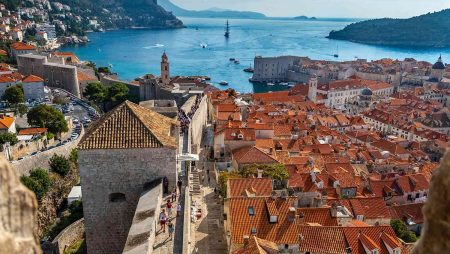
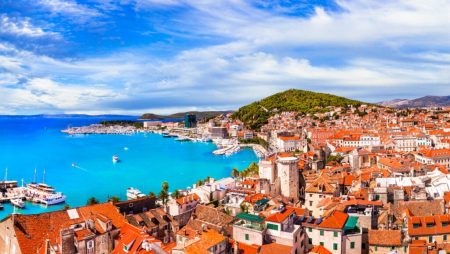
Let’s get this out of the way. If you’re expecting a polished walled city where everything is museum-clean and the only sound is shutter clicks, Split will confuse you. Split is loud. It’s lived-in. People hang laundry above Roman columns and kids play football in a square that’s older than most European countries. That’s not neglect — it’s continuity. Diocletian’s Palace has never stopped being a neighbourhood for seventeen centuries. No other Roman palace on earth can say that.
The smart move is to hire car Split and treat the city as your launch pad, not your whole holiday. Split is magnificent but compact — two days on foot covers the core. The real magic of the Dalmatian Coast starts once you have wheels and can point the car in any direction.
Our car hire Split depot puts you behind the wheel in minutes, whether you’re arriving at the airport, the ferry port, or the bus station. From there the entire central Dalmatian coast opens up — islands, national parks, medieval towns, and beaches that bus tours can’t reach.
Picking Up Your Car in Split: What Actually Matters
Split has three main pickup points: the airport (SPU, about twenty-five kilometres west of the city), the ferry port (Obala Lazareta, right across from the old town), and downtown locations. Each has its logic.
Airport pickup makes sense if you’re flying in and heading straight to the coast — you skip the transfer shuttle and the city traffic. Ferry port pickup is perfect if you’re arriving from Ancona or one of the islands and want a Dalmatian Coast rental car the moment your feet hit dry land. Downtown pickup works if you’ve already settled into your accommodation and decide you need wheels mid-trip.
A word on cars in Split: go compact. The streets inside the old town are pedestrian-only but the roads around it — especially the parking lots and the narrow residential lanes on the Veli Varoš side of Marjan — were built when a horse cart was the largest vehicle anyone imagined. A Fiat 500 or a VW Polo fits. A family SUV will make you sweat.
Diocletian’s Palace: How to Do It Right
The Palace isn’t a building you visit — it’s a grid of alleys you wander into. Enter through the Bronze Gate (the sea-facing southern entrance) around 8 AM, before the cruise ship crowds. The substructure halls — the cellars — are the best-preserved Roman interior on the coast. They were used as a dumping ground for centuries until excavation revealed them in the 1950s. Today they sell tickets for the well-preserved eastern half and the rest is a market selling lavender sachets, but the atmosphere in the dark stone corridors is genuine.
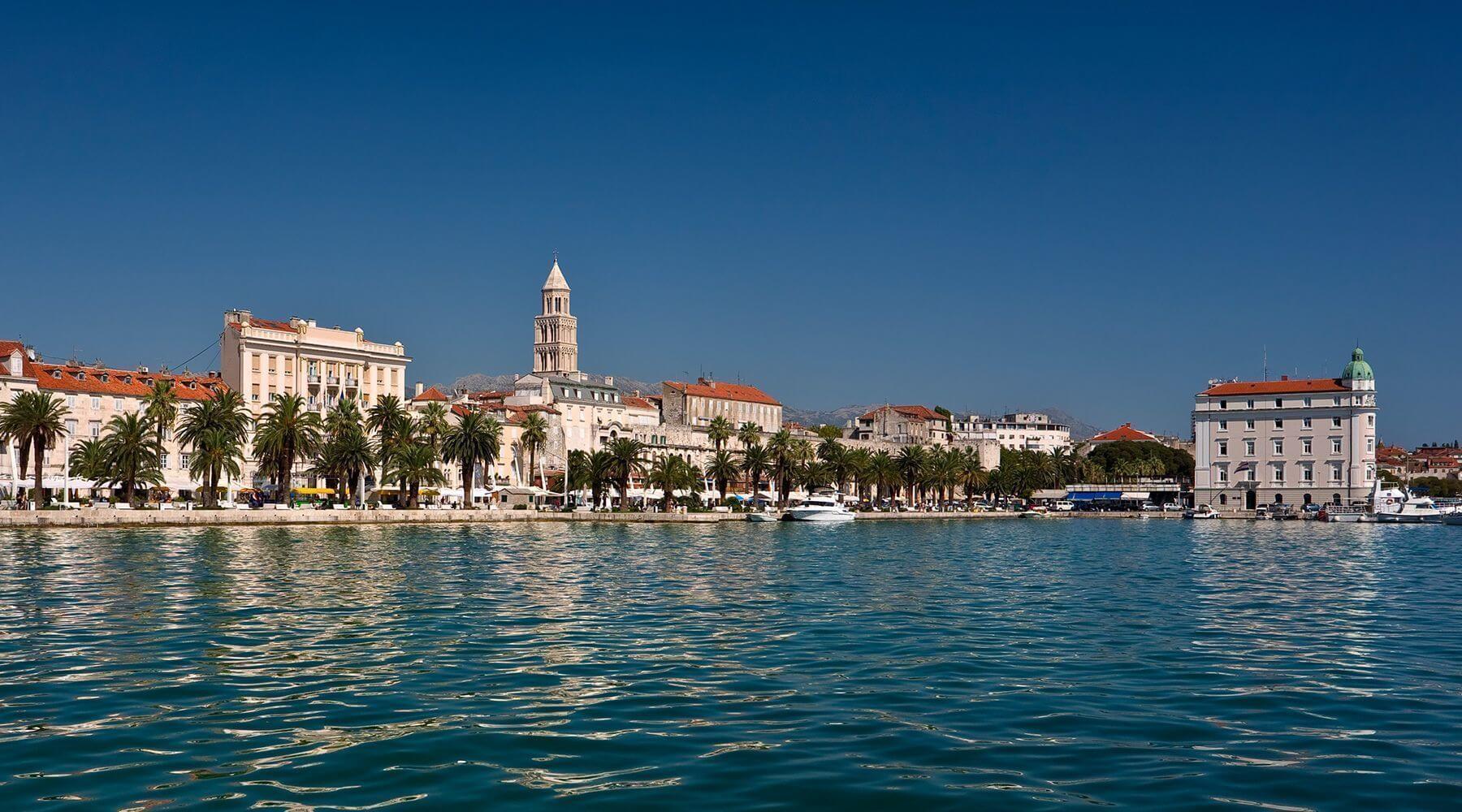
Above ground, the Peristyle is the palace’s central courtyard. Roman columns, an Egyptian sphinx (one of thirteen Diocletian imported after putting down a revolt in Egypt — only one survives intact), and a café where you can drink espresso leaning against 1,700-year-old stone. Climb the bell tower of St. Domnius Cathedral — it was Diocletian’s mausoleum before the Christians repurposed it, which is a nice bit of historical irony given Diocletian was the emperor who persecuted Christians most aggressively.
Don’t skip the Vestibule — the domed entrance hall just off the Peristyle. The acoustics are freakish. Klapa groups (traditional Dalmatian a cappella singers) perform there in the evenings for tips, and the sound ricochets off the stone dome in a way no concert hall can replicate.
Marjan: The Lung of Split
Marjan is the forested peninsula that rises west of the old town. Locals call it “the lungs of Split” and they’re not exaggerating — on a 35°C August afternoon, the pine-shaded paths are ten degrees cooler than the riva. Drive up to the Vidilica viewpoint (there’s a small parking area) for the classic postcard shot: the entire old town, the harbour, and the islands of Brač and Šolta in the distance.
The south side of Marjan has a string of small pebble beaches — Kašjuni, Bene, Ježinac — accessible by car but with limited parking. Go before 9 AM in summer or don’t bother. Alternately, park at the base of Marjan and walk the footpaths — the whole peninsula is criss-crossed with trails, chapels, and hermit caves carved into the cliffs. It’s the best thing about Split that most tourists never see because they never leave the palace walls.
Bačvice Beach: The Weird and Wonderful Local Ritual
Bačvice is Split’s city beach — a sandy-bottomed shallow bay ten minutes’ walk from the palace. The water is waist-deep for fifty metres out. It’s not the prettiest beach on the coast (it’s urban, the sand is fine and grey, and in August it’s packed to the seawall) but it’s where you witness picigin — a local ball game played in shallow water where the objective is to keep a small ball from touching the surface using acrobatic dives. Old men with beer bellies launch themselves horizontally into thirty centimetres of water with no apparent concern for spinal injury. It’s been a Split institution since 1908. Worth stopping by just to watch, especially on a Sunday morning when the serious players come out.
If you want a proper swim, your hire car Split gets you to better beaches within twenty minutes — the pebble coves around Podstrana south of the city, or north up the coast toward Trogir where the Kaštela riviera has stretches of beach with far fewer bodies per square metre.
Day Trips That Earn the Rental
Klis Fortress (20 Minutes)
Klis sits on a limestone ridge above Split, controlling the pass between the mountains and the sea. It’s been a fortress since Illyrian times — the Romans fortified it, the Ottomans took it, the Venetians took it back. More recently it stood in for Meereen in Game of Thrones, but ignore that if you can. The views are the real draw: on a clear day you see the entire Split basin, the islands, and the Adriatic stretching to the horizon. Your Dalmatian Coast rental car gets you up the winding road in twenty minutes. Go late afternoon when the light goes golden and the tour buses have left.
Trogir (30 Minutes)
If Split is the loud older brother, Trogir is the quieter, better-preserved younger sibling. A UNESCO World Heritage town on a tiny island, Trogir is thirty minutes west on the coastal road. Park on the mainland side and walk across the bridge into a maze of Venetian stonework. The Cathedral of St. Lawrence has Radovan’s Portal, the finest Romanesque sculptural work on the Adriatic. A car hire Trogir day trip from Split is effortless — leave after breakfast, spend the afternoon, be back for dinner on the riva.
Omiš and the Cetina River (30 Minutes)
Omiš sits where the Cetina River empties into the Adriatic through a dramatic gorge, thirty kilometres south of Split. In the Middle Ages it was a pirate stronghold — the Omiš corsairs terrorised Venetian shipping for two centuries. Today the pirates are gone but the fortress of Mirabela still clings to the cliff above town. The real action is on the river: rafting trips run three to four hours through Class II–III rapids in the canyon. It’s not extreme whitewater but it’s scenic and fun, and you’ll cool off in 12°C river water while the coast bakes at 35°C. Book morning departures — afternoons get busy.
Makarska Riviera (1 Hour)
An hour south of Split on the D8 coastal road, the Makarska Riviera is where the Biokovo mountain range drops almost vertically into the sea. The beaches are pebble, the water is absurdly clear, and the mountain backdrop makes you feel small in the best way. Towns like Brela, Baška Voda, and Makarska itself string along the coast with pine-shaded promenades and konobas serving grilled fish caught that morning. A hire car Split makes this an easy day trip — leave at 8, swim at Punta Rata beach in Brela (regularly voted one of Europe’s best), have lunch in Makarska, and drive back along the coastal road with the setting sun behind you.
Krka National Park (1 Hour)
The A1 motorway from Split to the Krka exit takes about an hour. Skradinski Buk is the main waterfall cascade — seventeen steps of travertine barriers dropping forty-six metres in total. Unlike Plitvice, you can still swim at the base (designated area at the foot of the falls, June through September). Park at Lozovac entrance, take the free shuttle down to the falls, and budget three hours to walk the full boardwalk loop. Our car hire Zadar location is also close to Krka if you’re approaching from the north.
Driving the Dalmatian Coast: The D8 vs. the A1
You’ve got two options between Split and Dubrovnik and they couldn’t be more different. The A1 motorway is smooth, fast, tolled — Split to Ploče in about ninety minutes, then the Pelješac Bridge carries you to the Dubrovnik side without crossing into Bosnia. Efficient, air-conditioned, boring.
The D8 — Jadranska magistrala — is the slow road. It hugs the coastline, swings through every village, and delivers views of the islands that the motorway tunnels straight through. The section south of Omiš where Biokovo mountain looms on your left and the sea sparkles on your right is one of the great coastal drives in Europe. It takes twice as long as the motorway and it’s worth every minute. If you’ve got a Dalmatian Coast rental car, do the motorway on the way down and the coastal road on the way back — or vice versa.
Practical: tolls on the A1 are paid at booths, card or cash. The coastal road has no tolls but fuel stations are sparse south of Makarska until you hit Ploče. Fill up before you pass Omiš if you’re doing the full coastal route. And watch out for the bura wind — it can gust hard enough on exposed sections to push a small car sideways. If the warnings are up, take the motorway.
Parking in Split: The Brutal Truth
Parking in Split is expensive and scarce. Expect €2–4 per hour in the city centre lots. The Sukoisan lot near the ferry port is the best option close to the old town — it’s open-air, relatively large, and a five-minute walk to the Bronze Gate. Street parking in residential zones is resident-only with a permit system and the fines are real — the parking wardens are efficient and unsympathetic.
If your accommodation has parking included, confirm the space actually exists before you arrive — “parking available” in a Split listing sometimes means “there’s a public lot 500 metres away if you’re lucky.” A compact car helps enormously here — the tighter the spot, the more you’ll appreciate having rented a Polo instead of a Passat.
Food Worth Driving For
Split’s restaurant scene splits into two tiers: the riva-facing places where the menu is in six languages and the prices assume you’re leaving tomorrow, and the back-alley konobas where the menu is a chalkboard in Croatian. Aim for the latter. Konoba Matejuška in the Veli Varoš neighbourhood does octopus peka (slow-cooked under a bell lid with potatoes and olive oil, the signature Dalmatian dish) and you need to order it a day ahead. Villa Spiza is a hole-in-the-wall that changes its menu daily based on what was at the fish market that morning — cash only, no reservations, get there when it opens.
For a drive-to meal, head to Konoba Nikola in Stobreč, a fishing village ten minutes east of Split. The terrace hangs over the water, the fish comes off the boat next door, and the prices haven’t been inflated for tourists because most of the customers are Split locals who drive out for Sunday lunch.
When to Visit Split
Split in July and August is intense. The palace alleys become a human conveyor belt, the beaches are wall-to-wall towels, and the temperature regularly hits 36°C. Some people love the energy; most don’t. June and September are the golden months — the sea is warm, the crowds are manageable, and the light has that soft Adriatic quality that makes every photo look professionally shot. May and October are wildcards — you might get a week of perfect swimming weather or three days of jugo (the humid south wind) that fills the air with salt spray. With a hire car Split, shoulder-season gambles pay off because you can chase the weather — if Split clouds over, drive inland toward Sinj or Imotski and you’re often in the sun within thirty minutes.
A Dalmatian Coast rental car also means you can base yourself in Split but escape it whenever the crowds get too much — the car gives you the freedom to improvise, which is what a proper holiday on this coast should be about.
From Split, a car hire Zagreb one-way rental is about four hours on the A1 if your trip takes you inland, or head north to car hire Zadar in ninety minutes for the northern Dalmatian islands. The entire coast is connected by good roads and your own set of wheels. Don’t overthink it — book the car, point it at the sea, and let the Adriatic do the rest.