
Discovering Dubrovnik and the Dalmatian Coast: A Guide to Hiring a Car at the Port
Why Dubrovnik Is Croatia’s Best Starting Point for a Road Trip
You fly into Čilipi, grab your bags, and step into the southern Dalmatian sun. The first thing you notice isn’t the heat — it’s the sheer wall of Mount Srđ rising behind the Old Town and the Adriatic stretching out into forever. Dubrovnik isn’t just a postcard. It’s a real, functioning port city that also happens to be one of the most photographed places in Europe. But here’s what the Instagram crowd misses: the real magic lies outside the city walls, down the coast and up into the hills. And you need wheels to reach it.
Car hire Dubrovnik gives you freedom that buses and tour boats simply cannot match. You set the schedule. You stop at the beach that catches your eye from the road — the one with no sign and three locals drinking Karlovačko under a pine tree. You stay an extra hour at that konoba in Orašac because the peka hasn’t finished cooking yet and the host just poured you a glass of his own red. Public transport in Croatia runs on island time. A rental car runs on yours.
The Dubrovnik-Neretva County is absurdly compact. In two hours you can be in Montenegro. In three, you’re in Mostar. In thirty minutes, you’re somewhere the cruise ship day-trippers never see. That’s the whole point.
Picking Up Your Rental at the Port: What Actually Happens
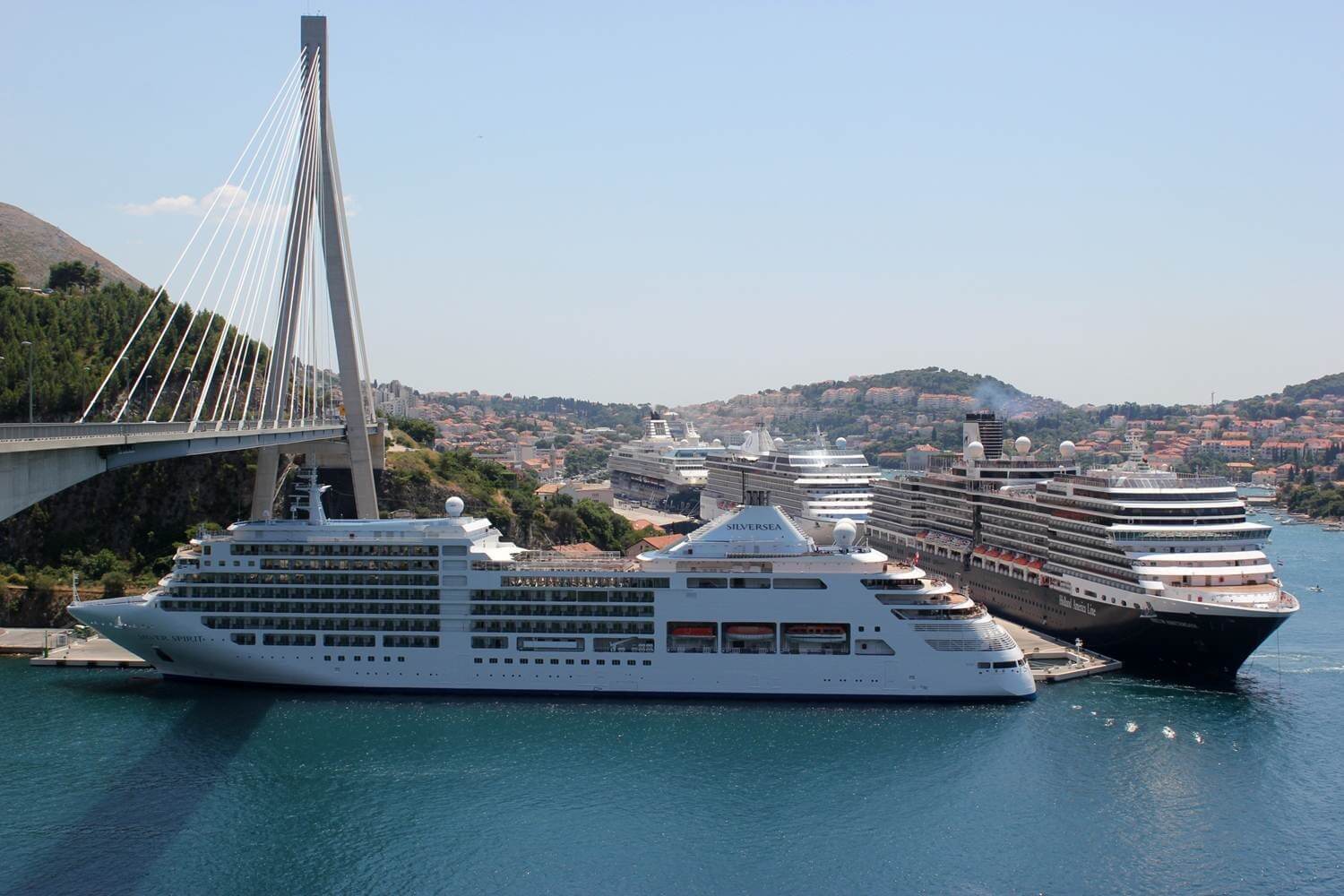
Dubrovnik has three practical pickup points: Čilipi Airport, the Gruž port, and a handful of city-centre offices. Gruž is the big one — it’s where the ferries dock and where most cruise passengers disembark. If you’re arriving by boat, you step off the gangway and into your rental within 15 minutes. No shuttle bus, no taxi queue, no hassle.
Here’s what nobody tells you. The car park at Gruž is tight. Not Rome-tight, but tight enough that you want something compact. A Volkswagen Polo, an Opel Corsa, a Škoda Fabia — these are the cars that make sense in Dalmatia. Narrow streets, cliffside parking, and the occasional goat on the road don’t reward a full-size saloon. The car hire Dubrovnik fleet at Cro Car Hire is built around exactly this reality. Small cars with enough boot space for a week’s luggage and a snorkel set.
A practical tip: if you’re collecting from the port, ask for the car to be brought to the passenger terminal building itself. It saves you dragging suitcases across the ferry parking chaos. Some agencies do this automatically. Some don’t. Worth confirming when you book.
Documents and Deposits
Standard stuff but worth repeating because people still arrive unprepared. Driving licence. Passport. A credit card in the driver’s name — debit cards are hit and miss. The deposit block typically runs between €500 and €1,000 depending on the car class and insurance package. Full coverage reduces stress dramatically on these roads. The dry-stone walls are hard and the mountain roads are narrow. Peace of mind costs about €10 a day extra and it’s the best money you’ll spend.
The Coastal Drive South: Cavtat, Konavle, and the Montenegro Border
Most visitors head north out of Dubrovnik toward Split. Smart. But the real sleeper hit is south. Take the D8 coastal road — properly the Jadranska Magistrala — heading southeast toward the airport and beyond. Twenty minutes in and you’re in Cavtat, a peninsula town that Dubrovnik locals quietly prefer to their own city. It’s what Dubrovnik felt like 40 years ago. Stone waterfront, cypress trees, and a harbour where you can park the car and jump straight into water so clear it feels like a filter.
Keep driving into the Konavle valley. This is wine country. Mali Plavac grapes grow on terraced slopes above the Ljuta river. Stop at Vinarija Botaro or one of the family-run wineries and taste something that never leaves the county. Buy a bottle. The trunk of your rental is about to become a mobile cellar.
The D8 then snakes past the airport and climbs. From the higher stretches you see the entire Dubrovnik archipelago spread out below: Lokrum, Koločep, Lopud, Šipan. On a clear spring day you can see clear to Korčula. This is one of the best Croatia coastal drive stretches in the entire country, and most tourists never drive it because they’re fixated on getting north. Their loss.
Heading North: The Pelješac Peninsula and Wine Road
Okay, now the classic route. From Dubrovnik, you take the D8 north toward Split. But you don’t barrel through. You stop at Ston.
Ston is famous for two things: the longest stone defensive wall in Europe outside China (5.5 kilometres of it, climbing up a hillside like a mini Great Wall) and oysters. Specifically, Mali Ston oysters — flat Ostrea edulis from the bay where fresh mountain water mixes with seawater. They’re served at Bota Šare with a squeeze of lemon and nothing else. Park the car at the waterfront. Eat a dozen. Thank me later.
Then you cross onto Pelješac proper. This peninsula produces Croatia’s best red wine and the scenery is ridiculous. Terraced vineyards dropping into the sea on both sides. The road hugs the spine of the peninsula with views across the Pelješac Channel to Korčula on one side and the open Adriatic on the other. Stop at Miloš in Ponikve for a tasting of their Stagnum, or Korta Katarina in Orebić for something more polished. Both are a ten-minute detour from the main road and worth every minute.
Until recently the Pelješac Bridge didn’t exist and you had to cross into Bosnia at Neum — two border crossings and a chunk of time wasted. The bridge opened in 2022 and it’s a game-changer. You now drive straight across, staying in Croatian territory the entire way. The bridge itself is stunning, an engineering marvel spanning 2.4 kilometres across the channel. Pull over at the viewpoint on the north side for a photo.
Makarska Riviera: The Surprise Highlight
Between Ploče and Split, the D8 — sorry, here it merges with the D8 proper — runs along the Makarska Riviera. This is a 60-kilometre stretch of Adriatic coast backed by the Biokovo mountains. The mountains are dramatic — grey limestone peaks that rise almost vertically from sea level to 1,762 metres. The contrast between the turquoise water and the stark rock face is something you don’t forget.
Stop in Brela. Its Punta Rata beach was once voted one of the best in Europe and while these lists are usually nonsense, this one holds up. The water is graded from shallow sand to deep sapphire over about 50 metres. Pine trees provide natural shade right to the water’s edge. Parking costs about €3 an hour in summer — another reason a small car helps, the spaces are sized for Fiats.
Further along, Baška Voda and Makarska itself are worth stops. Makarska has a proper town centre with a stone-paved main square and a Franciscan monastery housing a shell museum. Odd but worth ten minutes. The real draw is the waterfront promenade where you can sit with a coffee and watch the ferries come in from Brač.
If you’re in an SUV or something with reasonable ground clearance, take the Biokovo Skywalk detour. It’s a glass-floored viewing platform jutting out over a 1,200-metre drop with the islands of the central Dalmatian archipelago spread below you. The road up is single-track in places and your heart rate will spike, but the view from the top is among the best in Europe. €8 entry, open April to October. Check conditions before you drive up — the mountain makes its own weather.
Practical Tips for Your Dalmatian Road Trip
Summer vs. Off-Season Driving
July and August are busy. The D8 from Dubrovnik to Split gets clogged, especially around the Makarska Riviera where the road narrows and every pension and apartment block fronts directly onto it. Early mornings are your friend. Leave before 8 a.m. and you’ll have the road to yourself. Leave at 10 and you’ll be staring at German number plates for two hours. May, June, and September are perfect — warm sea, open roads, and restaurants that aren’t running on adrenaline.
Fuel, Tolls, and Parking
Fuel is cheaper than Western Europe but not by much. Fill up at INA or Tifon stations in towns rather than on the motorway. You’ll pay €1.45–€1.65 per litre for unleaded depending on global prices. The A1 motorway is tolled but you’re mainly driving the D8 coastal road on this route, which is free and far more scenic. If you do jump on the motorway for speed, keep cash or a card ready at the toll booths.
Parking in Dubrovnik Old Town is famously expensive. Ilina Glavica is the main public car park and charges about €10 per hour in summer. Instead, park in Gruž or near the port and take the number 8 bus into the Old Town (€2, runs every 15 minutes). Or better: you’re already heading out of the city. Point the car south or north and start driving.
Where This Road Trip Connects
From Dubrovnik you can drive north and reach Split in about three hours along the coastal road, or under three if you use the A1 for the inland stretches. Split is the logical next chapter — Diocletian’s Palace, the Riva promenade, and a ferry port that connects to Hvar, Brač, and Vis. A car hire Split pickup lets you continue the journey without backtracking.
Further north still, Rijeka is Croatia’s underrated third city. It’s rougher-edged than Dubrovnik, more industrial, and genuinely cooler for it. The Kvarner Gulf and Istrian peninsula spread out from Rijeka like a different country entirely. If you’re doing the full Adriatic run, a rent a car Rijeka pickup makes sense as the northern anchor point.
But start in Dubrovnik. The southern Dalmatian coast is the most dramatic introduction to Croatia you can get, and a rental car turns a three-day city break into a proper adventure. The walls of the Old Town are beautiful. The road beyond them is better.