
The Gateway to a Croatian Adventure with Car Hire Rijeka
The Gateway to a Croatian Adventure with Car Hire Rijeka
Rijeka Is Not What You Expect — And That’s the Point
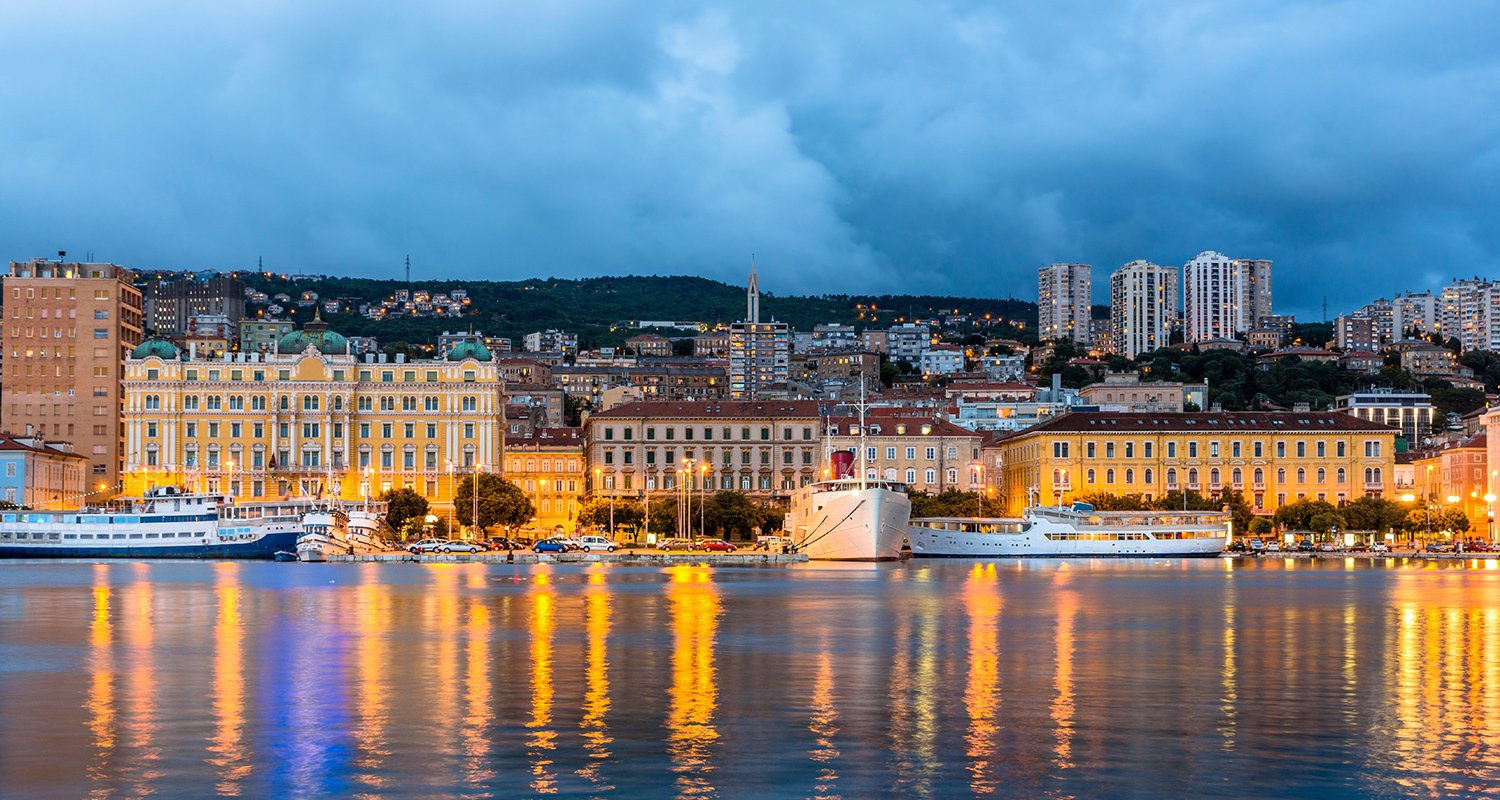
If Dubrovnik is Croatia’s polished museum piece and Split is its chaotic Roman heart, Rijeka is the country’s working port city that doesn’t dress up for visitors. It was European Capital of Culture in 2020 and most people still don’t know where it is. That’s changing, but slowly, and the city is better for it. Rijeka is real. The coffee is strong, the architecture is Austro-Hungarian industrial grandeur, and the locals don’t perform for tourists because there aren’t enough tourists to perform for.
A rent a car Rijeka pickup puts you at the top of the Adriatic with access to three distinct regions: the Kvarner Gulf islands (Krk, Cres, Rab, Lošinj), the Istrian peninsula to the west, and the mountainous Gorski Kotar interior to the north and east. You can be swimming in the Adriatic, eating truffles in a hilltop Istrian village, and hiking through bear country all in one day. No other Croatian city offers that range.
Cro Car Hire operates in Rijeka itself, which means you’re not wasting half a day fetching a car from a remote depot. The pickup is straightforward and you’re on the D8 coastal road or the A6 motorway within minutes. Rijeka’s ring road cuts through the city efficiently — you won’t get stuck in medieval one-way systems because Rijeka, bless it, built proper infrastructure.
Rijeka Itself: What’s Worth Seeing Before You Leave
Spend a morning in Rijeka before you point the car anywhere. The Korzo is the main pedestrian street, lined with Habsburg-era buildings in shades of ochre and faded yellow. At one end is the City Clock Tower, at the other the Adriatic. Walk it end to end in ten minutes, then detour.
Trsat Castle sits on a hill 138 metres above the city. You drive up — the road switchbacks through a residential neighbourhood and ends at a small car park below the castle walls. The fortress dates from the 13th century but the site has been occupied since pre-Roman times. The view from the terrace takes in the entire Kvarner Bay: Rijeka’s container port, the island of Krk, and on clear days the Velebit mountain range that walls off the Adriatic from the interior. Entry is free. The castle café serves decent coffee for €2. This is where Rijeka locals bring visitors. It’s where they bring themselves, too.
The Governor’s Palace houses the Maritime and History Museum. The building itself — a neoclassical pile built in 1896 for the Habsburg governor — is worth the €5 entry even if you skip the exhibits. The grand staircase and the ballroom with its original parquet flooring and chandeliers tell you everything about Rijeka’s status as the Austro-Hungarian Empire’s main maritime gateway.
For something stranger, visit Torpedo Launchpad. Rijeka invented the torpedo. Robert Whitehead, an English engineer working in the city, developed the first self-propelled torpedo here in 1866. The original launch ramp still stands on the waterfront near the old torpedo factory. It’s abandoned, fenced off, and completely unadvertised. Park near the Kantrida stadium and walk along the waterfront path. You’ll find it.
The Kvarner Islands: Krk, Cres, and Lošinj
Krk: The Accessible Island
Krk is connected to the mainland by a bridge — the Krk Bridge, completed in 1980, which held the world record for longest concrete arch span for nearly two decades. It’s a 40-minute drive from Rijeka. No ferry booking, no waiting. Just drive across and suddenly you’re on an island with 200 kilometres of coastline and a landscape that ranges from Mediterranean scrub in the south to almost alpine forest in the north.
The town of Krk itself has a well-preserved old centre with Roman mosaics in the cathedral and Frankopan castle walls. But the real draw is the beaches, particularly in the southern part around Baška. Vela Plaža is a 1.8-kilometre pebble beach with shallow entry that makes it ideal for swimming. In summer it’s busy. In June or September you get the same water temperature and a fraction of the crowd. Park near the harbour (€5 a day) and walk five minutes.
For something quieter, drive to Stara Baška on the island’s southwestern coast. The road is unpaved for the last few kilometres but passable in any rental car. The beach is a series of small pebble coves with water so clear you can see the seabed at five metres. There’s a single konoba serving grilled fish. That’s it. No jet skis, no beach bars, no music. This is what the Kvarner islands offered before tourism discovered them.
Cres and Lošinj: The Wild Islands
Cres is a 70-minute ferry from Brestova on the Istrian coast, or you can drive onto the island via the Krk Bridge and a second ferry from Valbiska to Merag (25 minutes). Either way, you’re on an island that feels removed from the 21st century. Cres town is a Venetian-era port with a loggia, a clock tower, and narrow stone alleys that funnel the bora wind through like a wind tunnel. The island is 66 kilometres long and most of it is empty — karst hills, olive groves, and the occasional village where the average age is north of 70.
Drive south to Osor, the tiny settlement that connects Cres to Lošinj via a swing bridge. The bridge opens twice daily for boats. Osor was a Roman town and the archaeological remains — walls, a forum, early Christian mosaics — are scattered through the modern village. The bronze sculptures installed during the annual Osor Musical Evenings add an unexpected layer of contemporary art to the stone streets.
Lošinj is Cres’s greener, more polished sibling. Mali Lošinj has a harbour filled with yachts and a waterfront promenade lined with Austrian-era villas. It’s posh. Veli Lošinj, five kilometres further, is quieter and prettier — a fishing village with pastel-coloured houses and a small harbour where you can eat freshly caught brancin (sea bass) at a konoba whose tables sit right on the water. The Čikat bay just west of Mali Lošinj has a beach and a forest park planted by the Austrians in the 19th century. The combination of pine scent and sea air is something you don’t forget.
Istria: Truffles, Hill Towns, and Roman Amphitheatres
From Rijeka, Istria is a 30-minute drive west through the Učka Tunnel. You emerge from the mountain into a different landscape: rolling green hills dotted with stone towns, vineyards, and olive groves. This is Tuscany with an Adriatic accent.
Opatija: The Imperial Resort
Before you cross into Istria proper, stop in Opatija. It’s 15 minutes from Rijeka along the coast. Opatija was the Austro-Hungarian elite’s winter resort — the Lungomare is a 12-kilometre coastal promenade built in the late 19th century that runs from Volosko to Lovran, past grand villas and manicured gardens. Park anywhere near the Slatina beach and walk a stretch. The Maiden with the Seagull statue at the waterfront is Opatija’s symbol. Everyone takes a photo. You might as well too.
Motovun and the Truffle Country
Motovun sits on a 277-metre hill in the Mirna river valley, about an hour from Rijeka. The drive up is steep and the road narrows to single-lane in the final approach. Park at the lot below the town walls (€3 an hour) and walk up through the gate. Motovun is a perfectly preserved medieval hill town with a central square, a Venetian loggia, and views across the Mirna valley that stretch to the sea on clear days. The forest below is one of the world’s best truffle hunting grounds.
Eat at Konoba Mondo. It’s not cheap — a plate of fuži (Istrian rolled pasta) with fresh white truffle shaved over it runs about €25–30 — but it’s the real thing. The truffles were in the ground that morning. Book ahead in season. The Motovun Film Festival in late July takes over the town and accommodation vanishes, but the energy is worth it if you can get in.
Nearby Grožnjan is Motovun’s quieter cousin — an artist colony with galleries in stone houses and a jazz festival in summer. Buje, slightly further north, has one of the best wineries in Istria: Kozlović. Their Malvazija and Teran are benchmark examples of Istrian wine. The tasting room overlooks vineyards that roll toward the Slovenian border.
Rovinj and Pula: The Coastal Jewels
Rovinj is 90 minutes from Rijeka and is Istria’s most beautiful coastal town. The old centre occupies a small peninsula with pastel houses rising up to the Church of St. Euphemia, whose bell tower is modelled on St. Mark’s in Venice. The cobbled streets are narrow enough that a Fiat 500 feels wide. Park at the large lot south of the old town and walk in. The Rovinj archipelago — 14 islets — dots the sea in front of the town. Boat trips run constantly but you’ve got a car, so you’re here for the town, not the islands.
Pula is another 40 minutes south. The Roman amphitheatre — the Arena — is the sixth-largest surviving Roman amphitheatre in the world and the only one with all four side towers intact. It held 23,000 spectators for gladiator fights. Now it hosts film festivals and concerts. Entry is €10 and you can walk the underground passages where animals and fighters waited. The Temple of Augustus and the Arch of the Sergii round out the Roman tour. Pula is a working port city like Rijeka but with Roman bones. Park near the Arena (€1.50 an hour) and walk the city centre in an afternoon.
Gorski Kotar: Croatia’s Mountain Wilderness
Thirty minutes inland from Rijeka and the Adriatic disappears. The A6 motorway climbs into Gorski Kotar — Croatia’s “Green Heart,” a forested mountain region that feels like Slovenia’s quieter cousin. Risnjak National Park covers 64 square kilometres of forest, karst, and alpine meadow. The highest peak, Veliki Risnjak, tops out at 1,528 metres and the hike from the Crni Lug entrance takes about three hours round trip. You might see deer. You might see a lynx if you’re extraordinarily lucky. The park is named after them (ris means lynx).
The source of the Kupa River is inside the park — a turquoise pool bubbling out of the rock at the base of a limestone cliff. It’s a 20-minute walk from the nearest road and the water is about 7°C year-round. You can drink it directly from the source. The forest around it is beech and fir, moss-covered, and silent except for birdsong. This is not the Croatia of the brochures. This is the Croatia that Croatians escape to when the coast gets too hot.
Further east, Lokve is a village known for its lake and its frog festival (yes, really — Lokvarska Žabijada, held every spring). The wider Gorski Kotar region has a network of hiking and cycling trails that are well-marked and empty of tourists even in August. The temperature is 8–10 degrees cooler than the coast. A rental car from Rijeka gets you here in 40 minutes. You can swim in the Adriatic in the morning, eat lunch at a mountain lodge in Gorski Kotar, and be back on the coast for sunset. That’s the geography of Rijeka’s advantage.
Connecting Rijeka to the Wider Adriatic Road Trip
Rijeka is the northern anchor of a Croatia coastal drive that runs the length of the Adriatic. Head south along the D8 and you pass through Senj, with its Uskok fortress, then the Velebit Channel where the mountain drops almost vertically into the sea. Further south, Zadar, Šibenik, and Split unfold in sequence. Split sits perfectly in the middle, and a car hire Split pickup lets you island-hop to Brač or Hvar. Continue south past the Makarska Riviera and the Pelješac peninsula and you reach car hire Dubrovnik, the southern bookend of the Adriatic road trip.
The full run from Rijeka to Dubrovnik is about 700 kilometres along the coastal road. You could do it in a day of hard driving. Don’t. Take a week. Stop at every town that catches your eye. The Adriatic coast rewards the driver who isn’t in a hurry.
Rijeka gives you something the southern cities can’t: variety. An hour in any direction and you’re in a different country, geologically and culturally speaking. Islands, mountains, truffle forests, Roman ruins, Habsburg promenades, and the best driving roads in Croatia. The city doesn’t dress up for you. It doesn’t need to.