
Plitvice to Split Drive | From €20/day | Car Hire Croatia
Plitvice Lakes and Split are two of Croatia’s most-visited destinations — one a pristine natural wonder of cascading lakes and wooden walkways, the other a historic port city built around a Roman emperor’s palace. The 280 km drive between them takes you across the heart of the Dinaric Alps, descending from the forested mountain plateau of the national park to the sun-baked Dalmatian coastline. This guide covers both route options, what to know about each, and how to make the most of the drive.
Why Drive from Plitvice to Split?
Plitvice is usually visited as a day trip from Zagreb or as a stop on the way to the coast. Most visitors who hire a car in Croatia and want to see both Plitvice and Split will drive this route — it’s the most flexible option, letting you leave Plitvice at your preferred time rather than coordinating with a bus schedule. The drive also passes through some genuinely beautiful inland Dalmatian territory that the highway route skips entirely.
The route has two distinct personalities: the A1 motorway option (fast, tolls, 3h 15m) and the D8 coastal route (slower, more scenic, 5-6 hours with stops). Both are valid approaches depending on your priorities.
The Route: Plitvice to Split — Two Options
Option 1: A1 Motorway (Fastest)
The most direct route follows the A1 motorway south from Plitvice toward Zadar, then continues south toward Split. Total distance: approximately 280 km. Driving time: 3h 15m without stops.
| Route Detail | Information |
|---|---|
| Distance | 280 km |
| Driving Time | 3h 15m (motorway, no stops) |
| Road | A-1 motorway (full toll road) |
| Tolls | Approximately €22–€26 (Plitvice toll gate to Split) |
| Fuel Cost | Approximately €35–€45 for the full route |
From Plitvice Lakes’ exit, take the D-1 north for approximately 8 km to the A-1 on-ramp at Lipovljani. Head south toward Zadar. The motorway passes through a tunnel-heavy section through the Velebit mountain range — several tunnels over 1 km in length, well-lit and in good condition. After Zadar, continue south on the A-1 toward Split. The motorway ends at Dugopolje, just inland from Split, with clear signs for Split Centar and the ferry terminal.
Option 2: D8 Coastal Route (Most Scenic)
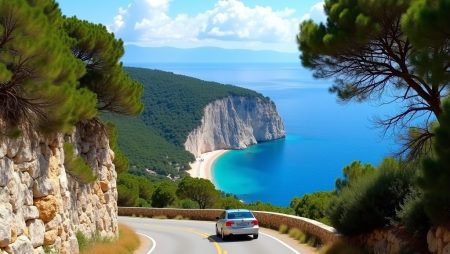
For drivers who want to see the Dalmatian coast properly, the D8 (also known as the Adriatic Highway) follows the coast all the way from Zadar to Split. Distance: approximately 295 km. Driving time: 5h to 6h with stops.
| Route Detail | Information |
|---|---|
| Distance | 295 km |
| Driving Time | 5h–6h (with stops) |
| Road | D-8 Adriatic Highway (two-lane coastal road) |
| Tolls | None on the D-8 |
| Fuel Cost | Approximately €38–€50 (more stops, more fuel) |
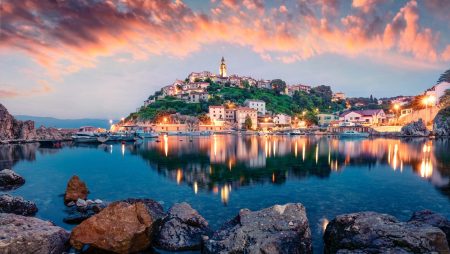
The D8 is a different driving experience entirely — narrow in places, passing directly through small coastal towns, with hairpin curves above the sea in several sections. The reward is a constantly changing view of the Dalmatian islands, hidden coves, and the genuine character of this coast. Key stops on this route include Zadar (1 hour), Sibenik (30 minutes), and Trogir (30 minutes) — all UNESCO World Heritage sites worth seeing.
Should You Take the Motorway or the Coastal Road?
The choice depends on what kind of trip you’re making:
- Take the A-1 motorway if you’re in a hurry, driving in summer heat, or want to maximise time at your destination. The toll cost (approximately €22–€26) is reasonable for the time saved.
- Take the D-8 coastal road if this is your first time on the Dalmatian coast, you enjoy scenic drives, and you’re not in a rush. Build in 3–4 hours of stops and treat it as part of your Croatian experience, not just a transit route.
In peak summer (July–August), the A-1 motorway can experience traffic delays near the Zadar junction and the Split exit, particularly on Friday afternoons and Sunday evenings as weekenders changeover.
What to Stop and See Along the Way
Zadar
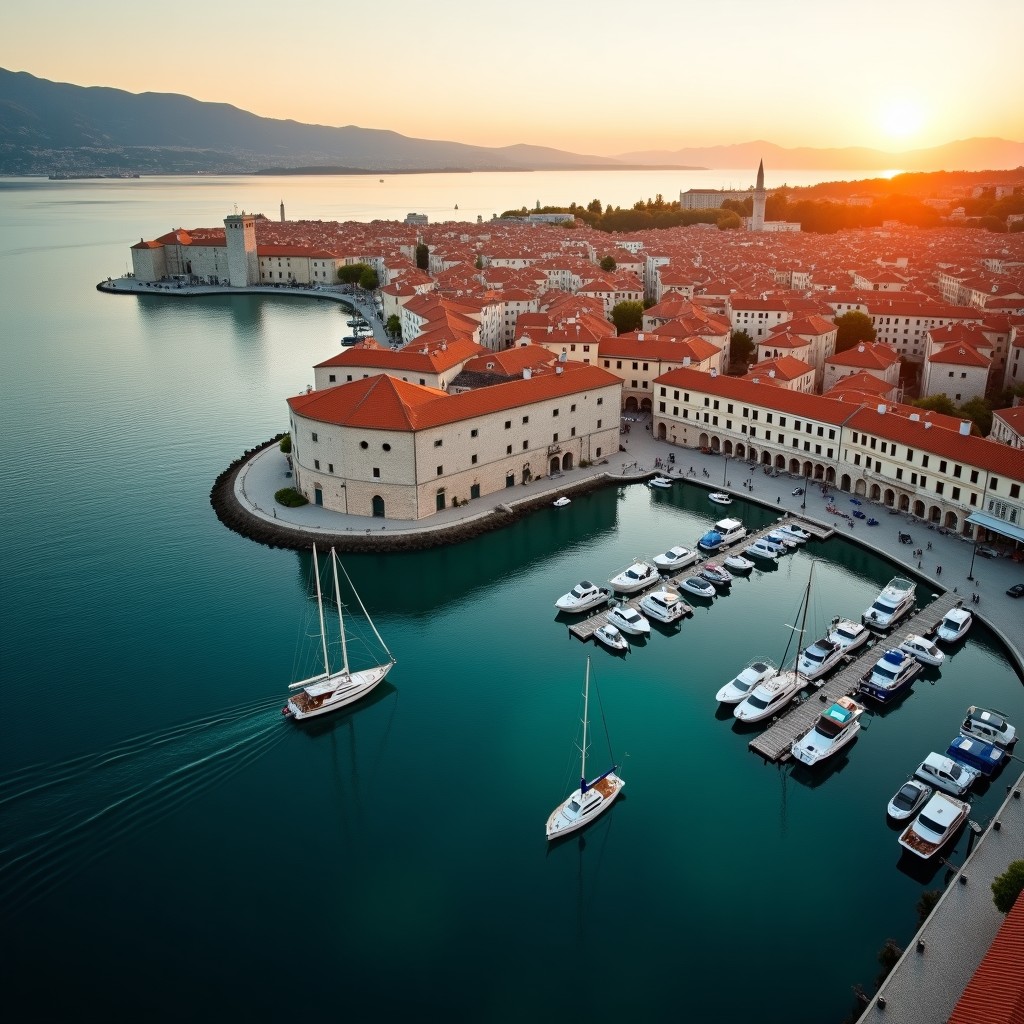
If you’re taking the coastal route, Zadar is a must-stop. The old town peninsula is one of the most atmospheric in Dalmatia — quieter than Split, with a Roman forum, the remarkable Sea Organ (a musical instrument played by the waves), and the Church of Saint Donatus. Allow 1–2 hours if you’re doing a proper walk around the old town.
Šibenik
Šibenik’s UNESCO-listed cathedral is one of the finest examples of Renaissance architecture in the Adriatic — built entirely in stone without wooden supports, a remarkable engineering feat for its time. The old town is compact and walkable, with a good waterfront promenade. Allow 30–45 minutes.
Trogir
Trogir is a small island city (connected to the mainland by bridge) that has been called ‘the city-museum’ for its extraordinary concentration of Romanesque and Renaissance architecture. The main cathedral and the loggia are the highlights. It is very popular with cruise ships, so visit early morning or late afternoon to avoid the crowds. Allow 30–45 minutes.
Krka Waterfalls (Detour)
The Krka National Park waterfalls are 30–40 minutes inland from Šibenik and can be combined as either a stop on the way south (if taking the coastal road) or as a separate excursion. The falls are dramatically different from Plitvice — they’re open for swimming, with wooden walkways leading directly behind the cascades. A combined Plitvice-and-Krka itinerary is popular, though Krka can get very crowded in peak season.
Plitvice to Split: Practical Driving Tips
- Toll payment: Tolls on the A-1 can be paid with cash (EUR or HRK) or card at the toll booths. There are no tolls on the D-8 coastal route.
- Vignette: Croatia’s vignette system covers the A-1 motorway. If your rental car doesn’t already have a vignette sticker, you must purchase one at a petrol station or toll booth before joining the motorway. vignettes start at approximately HRK 60 (€8) for a weekly pass.
- Tunnels: The A-1 has several long tunnels through the Velebit range. Use headlights at all times in tunnels and observe speed limits strictly — speed cameras are active.
- Fuel: Fill up before leaving Plitvice or at the last petrol station before the motorway. The A-1 service stations are widely spaced in the mountain sections.
- Summer driving: July and August can bring heavy traffic on both routes. Leave Plitvice early (by 8:00 AM) to avoid the worst of the weekend traffic.
- Split arrival: The Split ferry terminal is well-signposted from both routes. If you’re dropping a rental car in Split, most companies have offices near the ferry port — confirm the drop-off location in advance.
Plitvice to Split FAQ
How far is Split from Plitvice Lakes?
Plitvice Lakes to Split is approximately 280 km by the A-1 motorway (3h 15m) or 295 km via the D-8 coastal road (5–6h with stops).
Which is better: motorway or coastal road?
The motorway (A-1) is best if you’re short on time or want comfort. The coastal road (D-8) is best if you want to see the Dalmatian coast properly and enjoy scenic driving with interesting stops in Zadar, Šibenik, and Trogir.
Do I need a vignette for the A-1 motorway?
Yes — Croatia’s vignette (toll sticker) is required for the A-1 motorway. Weekly vignettes start at approximately HRK 60 (€8). Your rental car should have one already — confirm with the rental company before you drive.
Is the D-8 coastal road difficult to drive?
The D-8 is a two-lane road with some narrow sections and hairpin curves. It is slower and more demanding than the motorway, but the scenery is significantly better. Allow extra time and drive carefully through the towns.
Can I do Plitvice and Split in one day?
It is possible in theory (9+ hours of driving), but it means leaving Plitvice very early and arriving in Split late — with no time to properly enjoy either destination. An overnight stay in either Zadar or Šibenik, or a two-day itinerary, is a much better use of time.
Summary
The drive from Plitvice to Split is one of Croatia’s most varied road routes — forest plateau, mountain tunnels, the glittering Dalmatian coastline. Whether you take the A-1 motorway in 3h 15m or the D-8 coastal road with stops in Zadar, Šibenik, and Trogir, you’re covering one of the country’s most rewarding stretches of territory. Allow at least two days if you’re combining Plitvice and Split properly — one for the lakes, one for the drive and the coastal towns.
Ready to book? Visit our homepage for the best hire car deals.