
Zadar to Split Drive | From €18/day | Car Hire Croatia
Zadar to Split Drive | From €18/day | Car Hire Croatia
If you’re in Zadar and thinking about heading down the coast to Split, renting a car is the obvious move. The road from Zadar to Split is one of the most scenic stretches in northern Dalmatia — it runs right along the sea for most of the way, passes through a string of small towns, and takes you past islands you can see but not easily visit by bus. At around 160 kilometres, it’s a comfortable two-hour drive if you go straight, but you’d be mad to go straight. This guide covers the route, the stops worth making, road conditions, and what you need to know about hiring a car in Zadar before you set off.
The Route: Zadar to Split
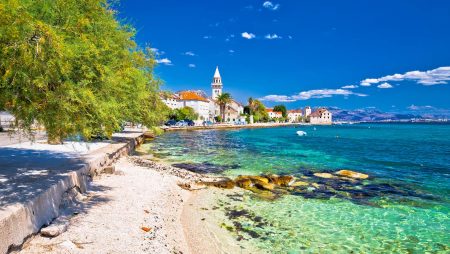
You take the D8 coastal road — known locally as the Adriatic Highway — heading south from Zadar. The road is a two-lane affair for most of the way, well-maintained, and for large stretches you have the sea on your right and mountains or olive groves on your left. It’s one of those drives that doesn’t feel like a chore even when you’re doing it for the second or third time.
Within 20 minutes of leaving Zadar you’re past the main built-up area and into a more rural stretch. The first real town you pass through is Biograd na Moru — a sailing hub with a nice waterfront and several marina complexes. It’s worth a short stop if you want a coffee by the water, but you won’t need more than 15 minutes here.
After Biograd, the road continues south through a series of smaller settlements: Turanje, Sveti Filip i Jakov, Pašman. These are small places — a church, a café, a few houses — but the road quality stays good throughout. Watch out for speed cameras in the built-up sections; they’re clearly marked but easy to miss if you’re concentrating on the view.
About an hour in, you reach Šibenik. This is the first major town on the route and genuinely worth stopping for. The old town is built around a harbour with a cathedral that’s a UNESCO World Heritage Site — the Cathedral of St. James. It’s not huge, but the architecture is striking and it’s one of those places that feels like it has more history per square metre than almost anywhere else on the coast. Parking is available near the harbour and costs a few euros for a couple of hours.
Šibenik to Split: The Final Stretch
From Šibenik south, the landscape becomes more dramatic. The road stays close to the coast but there are more hills now, and you’re occasionally switching back and forth as the road follows the contours of the land. The view back over the Šibenik archipelago is worth pulling over for if you spot a lay-by.
The next major town is Primošten — famous for its peninsula-connected-by-a-causeway old town and the vineyard that circles the hill above it. There’s a well-known restaurant on the waterfront if you’re hungry, or you can just walk the short promenade and get back in the car. The road through Primošten can get busy in July and August, so aim to pass through before 10am or after 4pm in peak season if you can.
After Primošten you pass through Rogoznica, then the road curves inland slightly as you approach the Split area. The last real town before Split is Omiš — a smaller place at the mouth of the Cetina River, famous for its wind and its pirates (there’s a small open-air museum about the Omiš pirates on the hill above the town). The Cetina River delta is a good spot for a walk or even a swim if you have time. The river mouth has a small beach that’s less crowded than the beaches closer to Split.
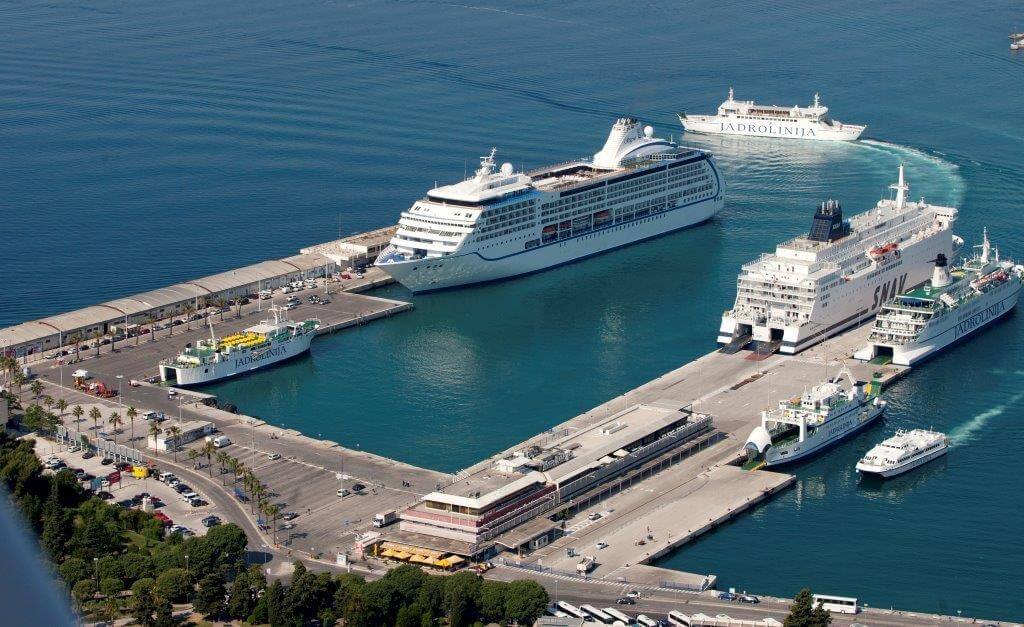
Then it’s about 25 more minutes to Split city centre, where the road brings you into the harbour district. Finding parking in Split itself is notoriously difficult in summer — your best bet is one of the garage car parks rather than street parking. The garage at the ferry terminal (Autobusna postaja) is centrally located and costs around €1.50–€2 per hour in summer.
Total driving time: approximately 2 hours non-stop. With stops at Biograd, Šibenik, Primošten, and Omiš, allow 3.5 to 4 hours.
Road Conditions and Driving Tips
The D8 is generally in good condition but it’s not a motorway — it’s a coastal road with all that implies. Expect occasional potholes, tight corners near the cliff sections south of Šibenik, and junctions where local traffic pulls out without much warning. The road is well-signposted throughout in both directions.
In summer, this route is heavily trafficked, particularly on Fridays (southbound) and Sundays (northbound) as Croatians head to their holiday destinations. If you’re travelling on a weekend in July or August, leave early morning or consider the faster but less scenic A1 motorway route via the inland road — it’s about the same time but skips the coastal towns.
Toll charges apply on the A1 motorway if you use it (the E65 inland route), but the D8 coastal road is free. Both routes are roughly similar in time if traffic is light.
What to watch for: Speed cameras are common near towns. The speed limit through built-up areas drops to 50 km/h and is enforced. Keep an eye on the rear-view mirror — local drivers do tend to tailgate on the open road, but the police do too.
Car Hire in Zadar and Returning in Split
Renting a car in Zadar and dropping it in Split is straightforward. Most major rental companies have offices in Zadar city centre and at Zadar Airport, and one-way rentals between Zadar and Split are generally available without a surcharge — but always confirm this at the time of booking. Prices for a compact car start from around €18 per day in shoulder season and go up to €30–€35 in July and August.
When you collect your car, check the insurance policy carefully. Third-party liability is mandatory and always included, but excess amounts vary. Fully comprehensive insurance with zero excess costs more per day but is worth considering if you’re planning to drive the smaller coastal roads where scratches from branches are a genuine risk.
No hidden fees — a reputable rental company will show you the total cost upfront including taxes and airport surcharges if applicable. Always check what’s included before you drive away.
Why Drive Instead of Taking the Bus?
The bus from Zadar to Split takes about 2.5 hours and runs frequently. It’s a decent option. But the car gives you something the bus doesn’t: the ability to stop where you want, when you want. The Dalmatian coast isn’t a place you experience best from a window at 80 km/h. Pulling over at a viewpoint above Šibenik, wandering around Primošten’s old town for 20 minutes, swimming at the Cetina river mouth — these are the things that make the drive worthwhile, and they only work if you have your own wheels.
You’ll also have the flexibility to take the inland route via the A1 motorway on the way back if the coastal road is gridlocked, or to detour up to Krka National Park — which is only a 20-minute drive from Šibenik and well worth half a day.
Krka National Park Detour
If you have extra time and you’re passing near Šibenik anyway, the Krka National Park detour is almost mandatory. The Krka River runs through a series of canyons and waterfalls, and there are walkways that take you right over the water. It’s one of the most distinctive natural landscapes in Croatia. The drive from the D8 to the main Skradin entrance takes about 20 minutes, and there’s a car park at the entrance. Expect it to be busy in summer — go as early in the day as possible.
Related Destinations
Looking for car hire nearby? Also explore Zadar car hire, Split car hire, Šibenik car hire, and Split Airport car hire.
Frequently Asked Questions
How long does the Zadar to Split drive take?
Approximately 2 hours non-stop on the D8 coastal road. With stops at Šibenik, Primošten, and Omiš, plan for 3.5 to 4 hours.
Is the Zadar to Split road toll-free?
The coastal D8 road is free. The A1 motorway (inland route) charges tolls. The coastal road is scenic but can be slower in summer traffic.
Can I hire a car in Zadar and return it in Split?
Yes, one-way rentals between Zadar and Split are widely available. Confirm with your rental company before booking as policies vary.
Is it easy to park in Split?
Parking in Split city centre is limited and expensive in summer. Use one of the central car parks rather than street parking. The garage at the ferry terminal is the most convenient.
Is the Zadar to Split coastal road safe to drive?
Yes, the D8 is well-maintained and generally safe. Watch for speed cameras in built-up areas, occasional potholes near cliff sections, and heavy summer traffic on weekends.